
Renaissance Reflections AR

The Past, The Present and

Reflections at Home and Away

Exploring the pivotal milestones that define Africa’s continuous rise.

Africa's Wealth

Reclaiming leadership and prosperity.

Thabo Mbeki's Movement

The Vision That Birthed Mbeki’s Movement​

The Renaissance

The Renaissance Is Here

What Our Partners Say

In an era where data-driven decisions are paramount, their focus on African-led research is a game-changer. They provide the intellectual rigor and structural insights needed to track progress and hold institutions accountable to the aspirations of Agenda 2063.
Partner
What sets them apart is their commitment to 'People-Centered Change.' They don't just produce reports; they create spaces for genuine dialogue that bridges the gap between high-level leadership and the communities they serve. This is what the African Renaissance looks like in action.
Partner
Partnering with this team has transformed how we approach evidence-based policymaking. Their deep understanding of the African governance landscape ensures that our initiatives are not just theoretically sound, but practically impactful and inclusive for all citizens.
Partner

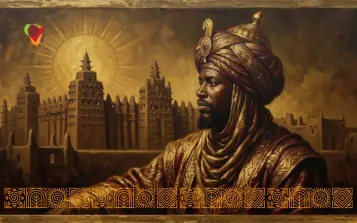
Mansa Musa - The richest man who ever lived

Long before the modern economy, Africa knew prosperity.

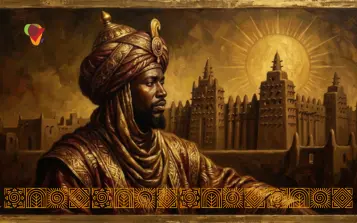
In 1324, Mansa Musa of Mali embarked on a pilgrimage to Mecca with a caravan so rich it shook the global economy. He carried so much gold that his spending in Cairo caused a decade-long inflation crisis. Historians estimate his wealth — adjusted for today — would surpass any fortune ever recorded.

But Mansa Musa was more than wealthy. He was a builder. He funded mosques, universities, and libraries across West Africa. Timbuktu became a global center of learning, attracting scholars from across the Islamic world.

This is not mythology. This is history.

Africa’s Renaissance is not about becoming something new, it is about reclaiming what was always there: wealth, knowledge, and leadership on the world stage.

The lions have always been mighty. Now, they remember.

Thabo Mbeki's Movement

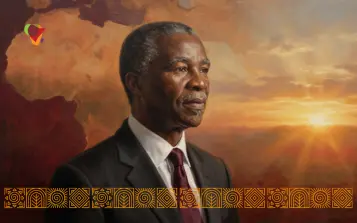
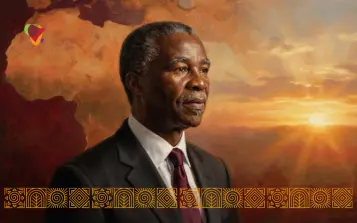
In 1996, Thabo Mbeki stood before the world and declared: “I am an African.”

His African Renaissance speech was not nostalgia, it was a manifesto. Mbeki called for Africa to reclaim its destiny: to end poverty, build democratic institutions, and restore the continent’s place as a producer of knowledge, not just raw materials.

He envisioned an Africa that would “no longer be a passive onlooker” but an active architect of its own future, economically self-reliant, politically united, and culturally proud.

Nearly three decades later, that vision pulses through every young entrepreneur in Lagos, every health advocate in Nairobi, every policy-maker at the African Union.

The African Renaissance is not abstract philosophy. It is a blueprint — one that Mbeki articulated and a new generation is now building, brick by brick.

The Renaissance was spoken into existence. Now it is being lived.

The Renaissance Is Here

Africa is not waiting for permission to rise — it is already building its future.

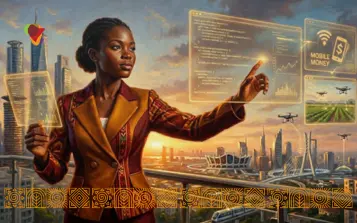
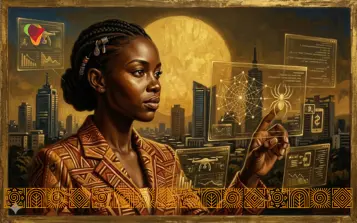
From Nigeria’s Yabacon Valley to Kenya’s Silicon Savannah, young innovators are creating homegrown solutions that leapfrog traditional barriers. Mobile money has revolutionized finance, putting banking in the hands of millions who never had a bank account. Startups are solving African problems with African ingenuity — in fintech, healthtech, and agritech.

This is more than technology. It is a movement.

A new generation is blending ancestral wisdom with digital tools, channeling the creativity of Anansi tales into code and commerce. The result: economic empowerment, cultural pride, and continental self-determination.

The narrative has shifted. Africa is no longer defined by what was taken — but by what is being built.

The Renaissance is not coming. It is here.