
Water Justice, Women’s Rights, and Africa’s Renaissance
As International Women’s Day 2026 unfolds under the banner “Rights, Justice, Action: For All Women and Girls,” Africa faces a defining question: will we turn our commitments into tangible change for the millions of women who form the backbone of our communities? The answer, I believe, lies in water, not as a technical utility, but as a human-rights lever that can unlock dignity, security, and economic opportunity for all.
Water scarcity is not merely an environmental challenge; it is a gender justice issue. For countless women and girls, the daily search for water begins before sunrise, with long, treacherous walks to distant sources. Hours that could be spent in classrooms, building startups, or engaging in community leadership are instead diverted to meeting a basic need. In this sense, “water scarcity … is a gender justice issue”, a reality that demands more than pipes and pumps; it requires governance that places women and youth at the very center of policy and decision-making.
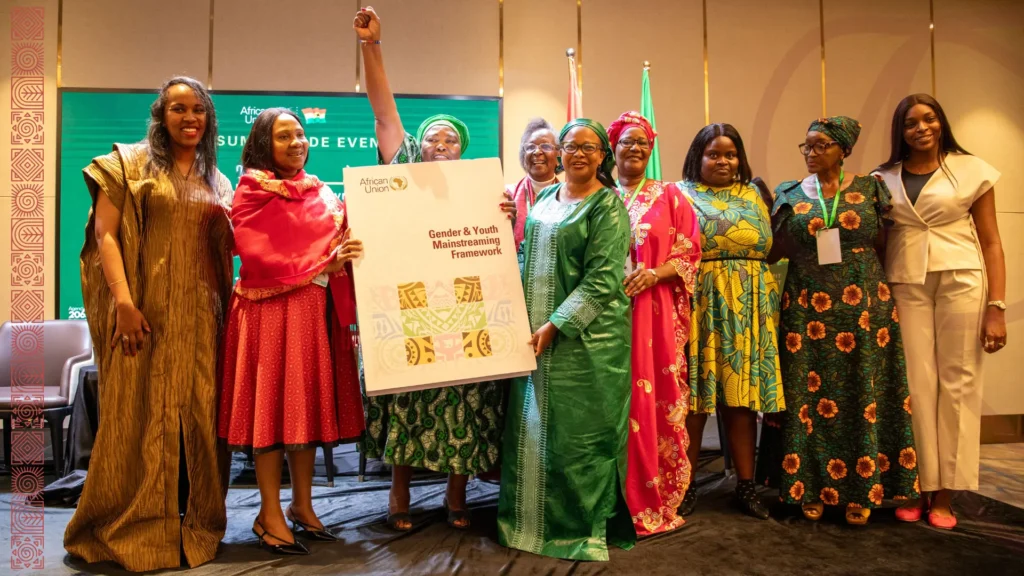
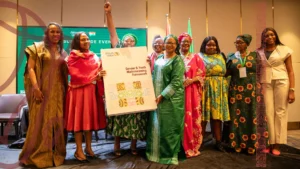
This is the essence of the African Union’s Gender and Youth Mainstreaming Framework, described as a “landmark instrument designed to ensure that gender equality and youth empowerment are not treated as optional ‘add-ons,’ but are embedded across African Union institutions, policies, and programs.” It is not a theoretical blueprint; it is a practical tool to reshape governance so that women and youth are designers and drivers of solutions, not merely beneficiaries. The Framework was officially launched at a high-level breakfast meeting on Financing & Reaffirming Africa’s Gender Commitments on the margins of the 39th AU Summit. A gathering that brought together policymakers, partners, and advocates around the shared objective of inclusive development that delivers real change.
The role of Africa’s Renaissance, the broader project to “connect, inform, activate” and accelerate inclusive growth, offers a powerful lens for this moment. The African Renaissance Trust’s support, financing, technical resources, and strategic backing have turned a bold idea into a program that can transform how institutions respond to inequality. This partnership embodies the Renaissance spirit: mobilising diverse actors and resources to deliver concrete, people-centered outcomes.
The Framework’s three connected pillars -People, Programs, and Policies provide a clear path from commitment to action. The “People” pillar focuses on advancing inclusive leadership, representation, and institutional culture. The “Programs” pillar emphasises designing and implementing initiatives that have gender equality and youth empowerment built in. Finally, the “Policies” pillar ensures that decision-making aligns with the lived realities of women and young people. Together, these pillars guide efforts to move from intention to meaningful, lasting impact.
This structure is particularly urgent for achieving sustainable water and sanitation systems. Women and girls are often the primary managers of household water, yet they are underrepresented where priorities and budgets are set. By ensuring they are at the table, not just on the agenda. We improve the odds that water systems meet real needs and endure under climate stress.
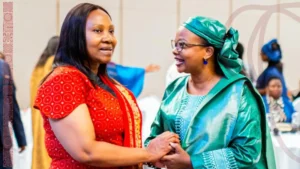
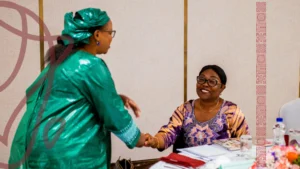
Caroline Kwamboka N Trustee and Director African Renaissance with Mrs Bwemo Sekgoma SG SADC During the Launch of the Gender Youth Mainstreaming framework
The promise is measurable as well as moral. When women and young people participate meaningfully in shaping water governance, systems become more practical, resilient, and equitable. In short, the Framework is not just a policy instrument; it is a bridge from commitment to implementation and a pathway from rights to action.
As we mark International Women’s Day 2026 and the Year of assuring sustainable water availability and safe sanitation systems to achieve the goals of Agenda 2063, let us commit to turning rhetoric into results. Let Africa’s Renaissance—our collective aspiration to build inclusive societies, empower youth, and uplift women- guide us to a future where clean water, safe sanitation, and equal opportunity are realities for all. The time for action is now. Our right to dignity, security, and progress demands it.
Caroline Kwamboka
African Renaissance Trust – Trustee and Director

You might also like
-
Renaissance Dialogue on Water and Sanitation in Africa: Turning Commitments into Accountability https://the-african-renaissance.org/2025/wp-content/uploads/2026/02/Renaissance-Dialogue-on-Water-and-Sanitation-in-Africa-Blog-1024x683.webp 1024 683 Mylande Edoun ODJO https://secure.gravatar.com/avatar/319e1ec5bd4eca1d1e89878931127e24621afee71612edb10ace8686defbef89?s=96&d=mm&r=g






Customer Reviews
Showing 0 reviews
Thanks for submitting your comment!