Get in touch
We really appreciate your feedback
 The African Renaissance
We really appreciate your feedback
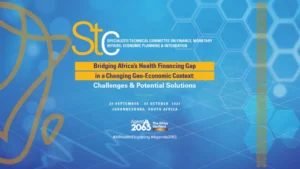
On the sidelines of the AU 8th STC on Finance, African Renaissance proposed and designed a consultative roundtable with REC Health Directorates from EAC, SADC, and ECOWAS …
The context demanded action: ODA to Africa’s health sector has plummeted 70% between 2021-2025, while governments allocate only 7.4% of budgets to health, half the Abuja Declaration target.
Our proposed partnership architecture delivers nine integrated advocacy deliverables: an AU-REC-Member States Health Financing Exemplars Database, Real-Time Intel Platform, Presidential Champion Networks leveraging ALM leadership, Private Sector Engagement Compacts, Country-Specific Economic-Language Briefs, and a Regional Accountability Scorecard.
From continental commitments to national implementation. From policy frameworks to budget allocations, we remain your truly trusted Advocacy architect.
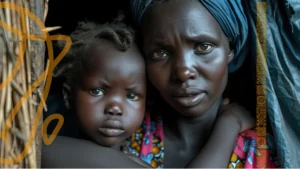
When the East African Legislative Assembly’s Health Committee needed technical expertise to on the EAC Sexual and Reproductive Health Bill to enable them protect 283.7 million East Africans, African Renaissance Trust delivered the capacity building that transformed political will into parliamentary action.
ART’s engagement with EALA parliamentarians has been systematic and sustained over the years: from the May 2021 EALA MPs Key Stakeholders Sensitization & Capacity Building Workshop through ongoing technical briefings on maternal mortality, teenage pregnancy, and health financing landscapes. This cooperation equips legislators with evidence: $66.9 per capita health expenditure (below Africa’s $116.9 average), 31.2% out-of-pocket payments, and the devastating impact of ODA cuts on UHC progress.
African Renaissance is bridging civil society advocacy (Pamoja of East Africa CSOs) with legislative authority, ensuring SRHR provisions in international frameworks are domesticated in the East African Community.
Capacity delivered to parliamentarians means policy makers are equipped to protect mothers and childrens’ lives.
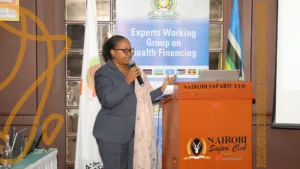
When the East African Community embarked on developing its most comprehensive health financing strategy, “Financing the Last Mile to Universal Health Coverage”, African Renaissance Trust was positioned at the expert table, as a member of the EAC Health Financing Experts Group.
A 153,000-word regional blueprint has been developed by the Experts working group to address the structural crisis facing 300+ million East Africans. The average health insurance coverage is at an average of just 22%, out-of-pocket expenditure has skyrocketted reaching 44% in some countries, and 33% regional dependence on external aid is now under threat given the ODA cuts.
Our expertise has contributed to shaping the four strategic pillars: mobilizing more money for health, maximizing efficiency, ensuring equity and financial protection, and strengthening governance. The Strategy translates theAfrican Union ALM Declaration into actionable regional interventions, from earmarked health taxes to pooled procurement to performance-based financing models.
The African Renaissance Trust co-convened a side event and delivered data-driven technical excellence that was key in re-designing solutions to Africa’s health financing crisis.
The African Renaissance Trust co-convened a side event and delivered data-driven technical excellence that was key in re-designing solutions to Africa’s health financing crisis.
Dr. Edward Kataika (ECSA-HC) presented a regional analysis revealing that 40-60% of health budgets across nine East, Central, and Southern African countries depend on ODA, with USAID losses exceeding 50% of commitments, resulting in reduced HIV/TB diagnostics, interrupted viral load testing, and community health worker layoffs.
Dr. Alex Adjakpa (UNICEF) provided a continental perspective: $7.6 billion in projected losses across 55 AUstates, with 21 countries facing 40%+ cuts. The modeling revealed devastating impacts, 2 million additional unvaccinated children, 15 million more malaria cases, and a 26% surge in the UHC coverage gap affecting 370 million people.
These briefings delivered actionable intelligence: earmarked health levies (Zimbabwe’s model), integration over verticalization, and recomendded addressing the $9.5 billion lost annually to health sector corruption – as this exceeds the continental funding gap itself.
Evidence to action. Data to decisions. African Renaissance continues enabling the conversation.
African Renaissance Trust operates at the precise intersection where governments meet multilateral institutions, private investors meet policy makers, and African priorities meet global platforms.
When African Finance Ministers gathered in Johannesburg to address the continent’s most pressing economic challenges, African Renaissance Trust was on site, co-convening a strategic side event on health financing alongside ECSA-Health Community and Global Health Strategies, drawing representatives from 40 Member States for urgent dialogue on navigating the $12 billion ODA shortfall threatening African health systems.
The session was framed as a renaissance moment, as Africa’s “rebirth” in health financing. Domestic resource mobilization, innovative financing mechanisms, and regional collaboration were positioned at the center of ministerial deliberations and this has provided an excellent basis upon which national and REC consultations are developing.
From concept to convening to ministerial influence, this is Renaissance execution at the highest level of continental governance.

When 55 African Member States needed unified voice, strategic expertise, and seamless logistics at the world’s most consequential climate summit, African Renaissance Trust delivered through its partnership with African Union, GHS and Seconded Staff positioned at the AU‘s Sustainable Environment and Blue Economy (SEBE) Directorate.
ART’s seconded expertise formed part of the core AU delegation that advanced Africa’s priorities: securing the$250 million Loss and Damage Fund operationalization, shaping the $300 billion NCQG climate finance target, and launching the Africa Climate Action Partnership (AfCAP) and Africa Action Plan on Carbon Markets.
The mission orchestrated 40 Africa Pavilion side events, coordinated Africa Day with CAHOSCC and AGN leadership, and facilitated strategic bilateral engagements with AfDB, UNDP, WMO, EU, and the Brazilian COP30 Presidency.
Seconded expertise. Logistics excellence. Africa’s voice amplified on the global stage.
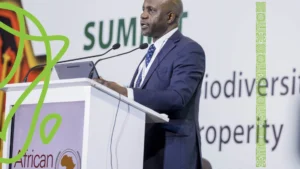
When the African Union Commission needed to establish Africa’s first continent-wide, evidence-based climate accountability framework, African Renaissance Trust expertise was positioned at the heart of the AU‘s Sustainable Environment and Blue Economy (SEBE) Directorate.
The ACS2 Pre-Implementation Baseline Monitoring Report, establishes the 2025 benchmark for tracking theAddis Ababa Declaration across 55 Member States. The evidence is comprehensive: 40% population coverage under early-warning systems, 72 GW renewable capacity toward the 300 GW target, only 0.8% of Africa’s $798 billion climate-finance needs met, and 6 countries with operational Article 6 carbon-market frameworks.
This strategic positioning places our expertise inside the analytical engine driving continental climate governance, from adaptation and resilience to green industrialization, from carbon markets to loss and damage.
In and apart of shaping the framework and leading the conversation.
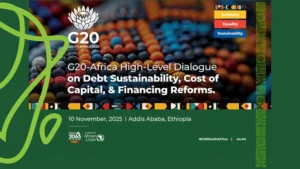
When South Africa’s historic G20 Presidency convened senior officials at AU Headquarters to challenge dominant narratives and advance African-led proposals for global financial architecture reform, African Renaissance Trust’s technical expertise was embedded in the machinery that made it happen.
Through the AU Partnership Platform, ART deployed secondees who provided the technical backbone for this landmark convening, supporting the African Union Commission’s Department for Economic Development, Trade, Tourism, Industry and Minerals (ETTIM) in coordinating logistics, documentation, and stakeholder engagement across 41 Member States and international partners.
The dialogue produced actionable recommendations: reforming the G20 Common Framework, establishing theAfrican Debtors Forum, accelerating the African Credit Rating Agency, and strengthening domestic fiscal capacity.
This is Renaissance infrastructure: African expertise enabling African institutions to shape African futures on theglobal stage.
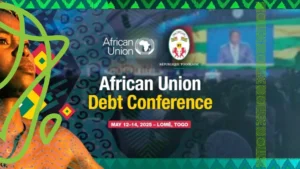
When the African Union convened 41 Member States, four Regional Economic Communities, and international organizations in Lome to forge a Common African Position on Debt, African Renaissance Trust was embedded at the heart of the technical infrastructure.
Through strategic secondment of expert personnel to the AU Commission, we provided technical capacity that enabled this landmark conference, from coordination to documentation. The conference addressed Africa’s most pressing fiscal challenges: debt sustainability, domestic resource mobilization, credit rating reform, and the operationalization of AU Financial Institutions.
This is how African Renaissance operates: delivering capability where the continent needs it most. When AU organs require surge capacity for high-stakes convenings, we deploy expertise that makes continental coordination possible.
From concept to execution to outcome documentation—African Renaissance delivered.Invisible excellence. Indispensable impact.
Invisible exellence. Indispensable impact.
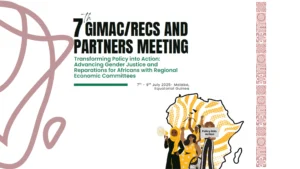
When the GIMAC Network convened Regional Economic Communities and partners in Malabo, African Renaissance Trust delivered more than attendance—it delivered intellectual firepower on the frontlines of Africa’s justice agenda.
ART led the Workshop on Economic and Climate Justice during Youth Advocacy Training, shaping a powerful continental dialogue on dismantling colonial economic legacies and building just, green futures. The session equipped young advocates with actionable strategies on climate reparations, debt cancellation, and sustainable development—arming the next generation to lead with purpose and vision.
This was not passive participation. ART’s contributions were formally captured in the Outcome Document now informing REC-led initiatives, AU Member State engagement, and advocacy campaigns for transformative reparations across the continent.
From workshop facilitation to policy influence to youth empowerment—African Renaissance demonstrated that continental transformation requires African voices shaping African futures.
Ideas that matter. Impact that endures.
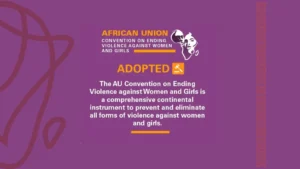
When the African Union embarked on developing its first legally binding continental instrumentto end violence against women and girls, African Renaissance Trust was not on the sidelines—it was co-leading the civil society engagement.
In collaboration with GIMAC Network and Nala Feminist Collective, ART co-organized the September 2024 CSO Regional Consultations that gathered perspectives from 546 civil society organizations across all five African regions—North, South, East, West, and Central Africa. ART developed and launched the GIMAC-African Renaissance Harvesting Toolkit, which captured 814 citizen voices to ensure the Convention reflects the lived realities of African women and girls.
ART’s Trustee Caroline Kwamboka delivered opening remarks alongside the GIMAC Chairperson and UN Women Representative, while ART staff moderated sessions and led continent-wide sensitization campaigns.
From research to consultation to advocacy—African Renaissance shaped Africa’s most significant gender law in a generation.
Co-organizer. Co-designer. Co-owner of continental transformation.
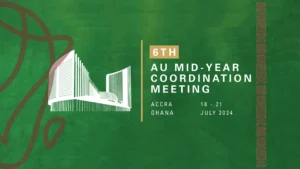
When the Gender Is My Agenda Campaign convened its 6th Strategic Engagement with the African Union in Accra, African Renaissance Trust Trustees and Team in a demonstration of true partnership anchored operation intellectually, technically and financially.
ART provided end-to-end logistical, financial, and technical coordination, professional media coverage through Ghana News Agency, Peace FM, Joy Online, and GTV, multilingual interpretation, and full audiovisual documentation.
Beyond logistics, ART commissioned and supervised the consultancy to track AU uptake of GIMAC recommendations, ensuring civil society voices didn’t vanish into summit communiqués but were systematically monitored for implementation.
This is Renaissance infrastructure: African institutions convening African women’s movements, resourced by African organizations, holding African governments accountable. Commitment demonstrated. Credible orchestration delivered.
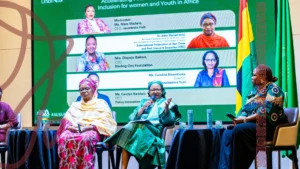
The African Union’s Women, Gender and Youth Directorate set an ambitious goal in 2024: a unified continental framework to institutionalize gender and youth mainstreaming across all AU systems.
African Renaissance Trust was at the table, not as observer, but as supportive technical partner.
Through sustained collaboration with the AUC Directorate and the Global Center for Gender Equality, we contributed to the ideation and development of the AU Gender and Youth Mainstreaming Framework. The framework is organized around three dimensions: People, Programs, and Policies.
The April 2025 Nairobi write-shop marked a pivotal milestone, operationalizing the framework with guidelines, scorecards, and implementation pathways.
This partnership demonstrates our capacity to work at the highest levels of continental governance, shaping enabling frameworks that will be referenced by AU institutions for decades.
When the AU needed partners who understood both technical rigor and political navigation, African Renaissance delivered.
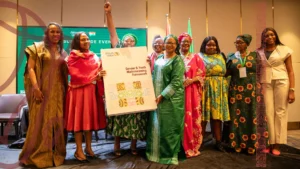
When Africa needed practical tools to close the gender and youth gap in sanitation and strengthen the implementation of the ASPG (insert link), African Renaissance Trust answered with an instrument that was ideated and born from African evidence and African expertise.
In partnership with APHRC (the continent’s leading population health research institution) and AMCOW (Africa’s Ministerial Council for Water) and , we co-created the GEYSI Toolkit for the Water and Sanitation Sector, a modular instrument that has been adopted by ministerial convenings accross Africa and one that translates inclusion principles into enforceable standards across the entire policy cycle.
African Renaissance is supporting institutions to diagnose African challenges in sanitation. African researchers are helping us generate African evidence and African policymakers are owning and implementing African solutions.
The toolkit covers pre-policy diagnostics, design standards, implementation guidance, and accountability scorecards, ensuring that gender, youth, and social inclusion become the organizing logic of sector reform.
From aspiration to architecture. From commitment to capability. This is the African Renaissance at work.
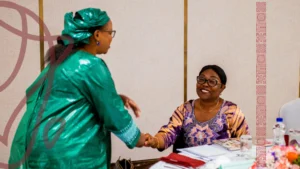
As Africa enters the 2026 AU Year of Water and Sanitation, African Renaissance Trust stands alongside GIMAC as a strategic civil society partner, recognized in official AU stakeholder mappings alongside the Gates Foundation, AfDB, AMCOW, and major development partners.
ART’s collaboration with GIMAC positions the women’s movement at the center of the 2026 agenda, ensuring that water security is framed not merely as infrastructure, but as gender equity, climate justice, and socioeconomic transformation. From the Lusaka Water Partnership Conference to the UN Water Conference in December 2026, ART provides the technical architecture linking WASH with health, climate resilience, and the priorities of Canada, Denmark, Sweden, Netherlands, and Finland.
This is multilateral harmonization in action: aligning AU frameworks, REC implementation, Member State domestication, and development partner financing around a unified vision.
Water as a pillar. Gender as the foundation. African Renaissance as the bridge.

Africa is not waiting for permission to rise — it is already building its future.
From Nigeria’s Yabacon Valley to Kenya’s Silicon Savannah, young innovators are creating homegrown solutions that leapfrog traditional barriers. Mobile money has revolutionized finance, putting banking in the hands of millions who never had a bank account. Startups are solving African problems with African ingenuity — in fintech, healthtech, and agritech.
This is more than technology. It is a movement.
A new generation is blending ancestral wisdom with digital tools, channeling the creativity of Anansi tales into code and commerce. The result: economic empowerment, cultural pride, and continental self-determination.
The narrative has shifted. Africa is no longer defined by what was taken — but by what is being built.
The Renaissance is not coming. It is here.
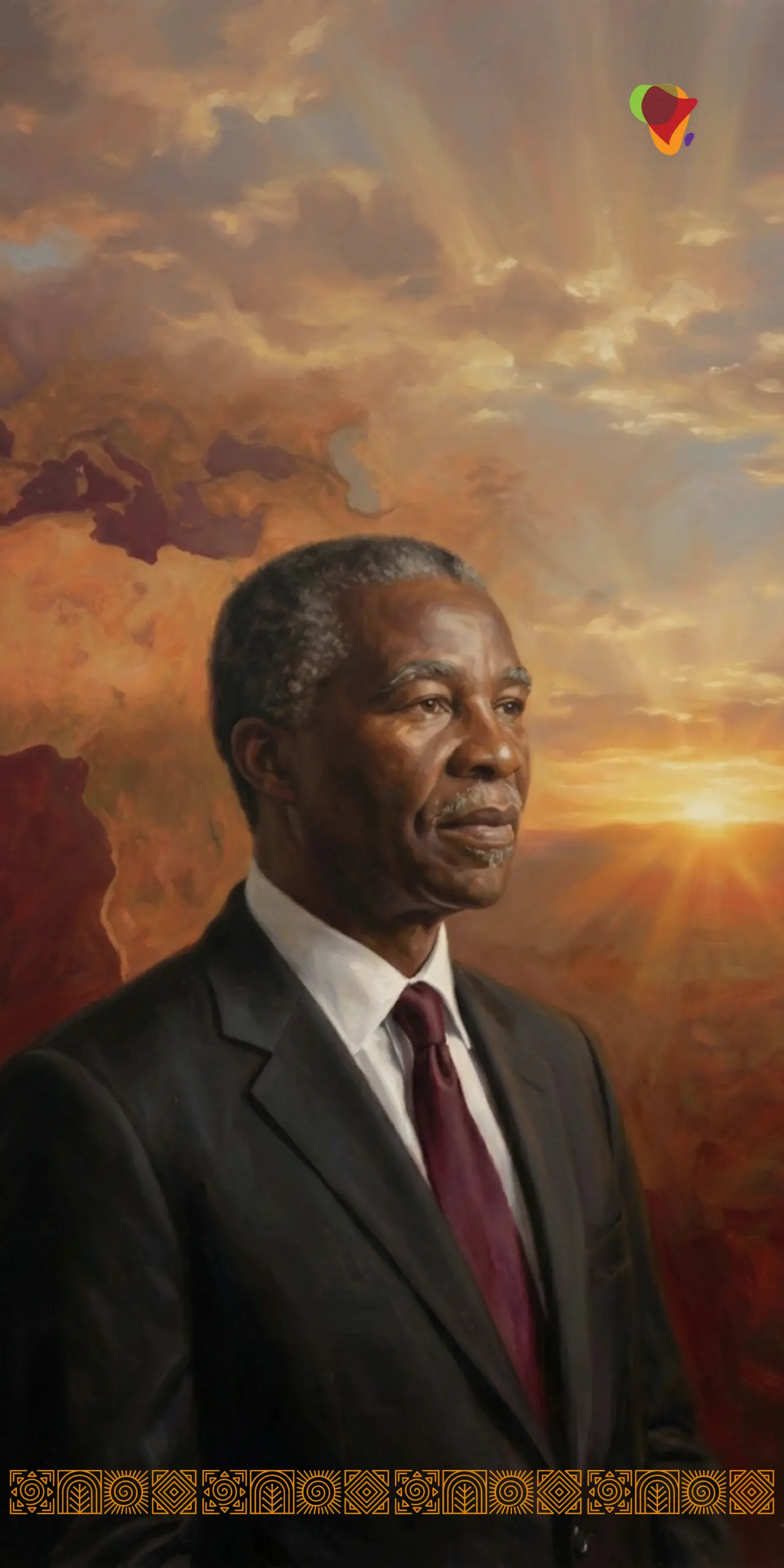
In 1996, Thabo Mbeki stood before the world and declared: “I am an African.”
His African Renaissance speech was not nostalgia, it was a manifesto. Mbeki called for Africa to reclaim its destiny: to end poverty, build democratic institutions, and restore the continent’s place as a producer of knowledge, not just raw materials.
He envisioned an Africa that would “no longer be a passive onlooker” but an active architect of its own future, economically self-reliant, politically united, and culturally proud.
Nearly three decades later, that vision pulses through every young entrepreneur in Lagos, every health advocate in Nairobi, every policy-maker at the African Union.
The African Renaissance is not abstract philosophy. It is a blueprint — one that Mbeki articulated and a new generation is now building, brick by brick.
The Renaissance was spoken into existence. Now it is being lived.
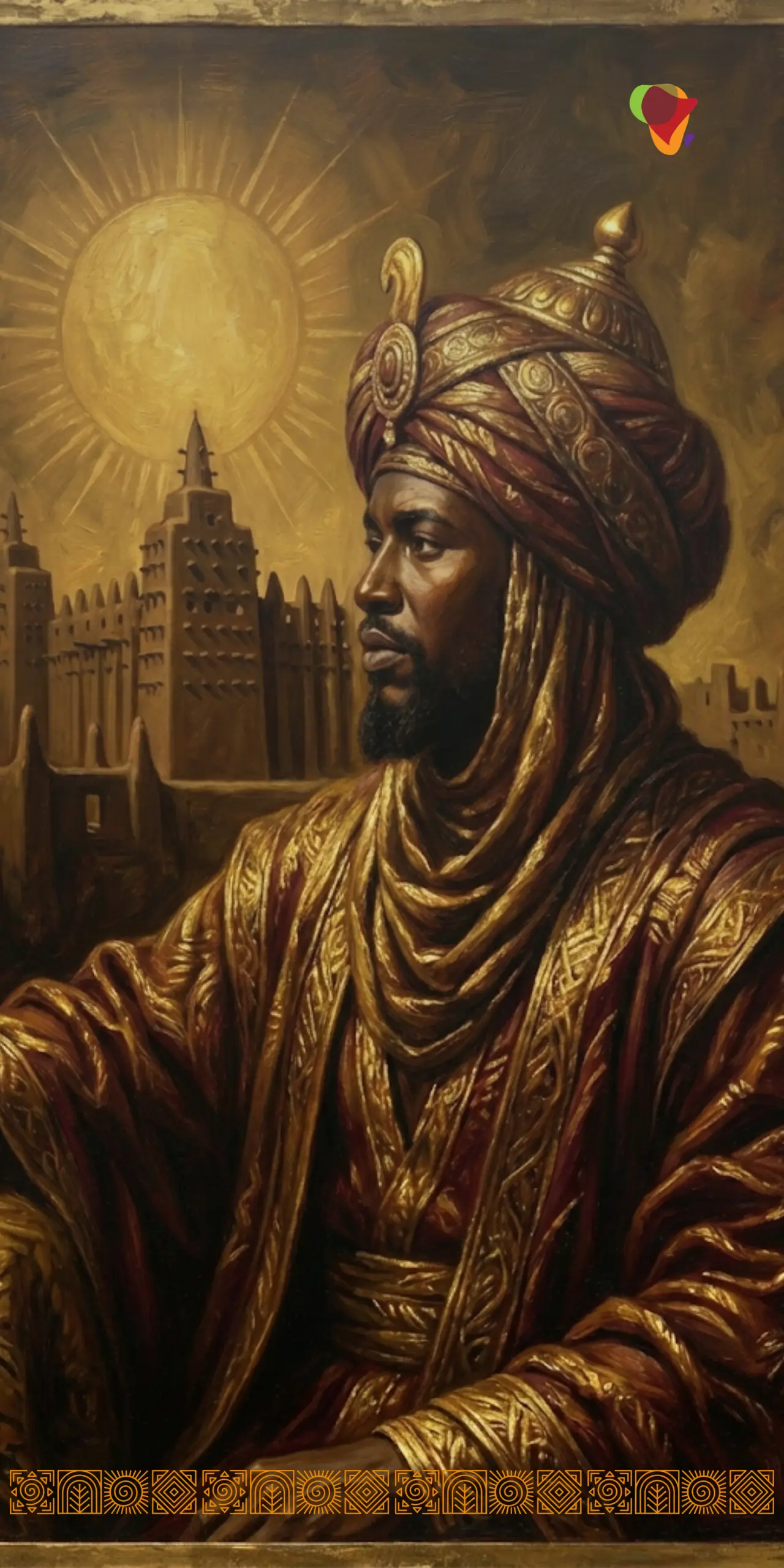
Long before the modern economy, Africa knew prosperity.
In 1324, Mansa Musa of Mali embarked on a pilgrimage to Mecca with a caravan so rich it shook the global economy. He carried so much gold that his spending in Cairo caused a decade-long inflation crisis. Historians estimate his wealth — adjusted for today — would surpass any fortune ever recorded.
But Mansa Musa was more than wealthy. He was a builder. He funded mosques, universities, and libraries across West Africa. Timbuktu became a global center of learning, attracting scholars from across the Islamic world.
This is not mythology. This is history.
Africa’s Renaissance is not about becoming something new, it is about reclaiming what was always there: wealth, knowledge, and leadership on the world stage.
The lions have always been mighty. Now, they remember.