
Health Equity
From Aid Dependency to Health Sovereignty: African Renaissance Trust’s Leadership at the 2026 SADC Joint Meeting of Ministers of Finance and Health.
30 June 2026 · Elie Kwiravusa · 10 min read

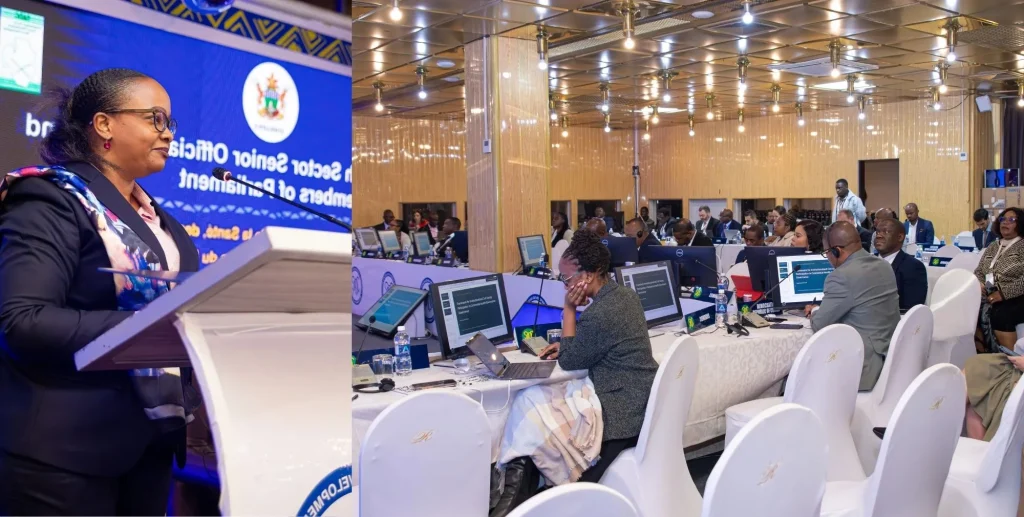
The 2026 SADC Joint Meeting of Ministers of Finance and Health, held in Harare, Zimbabwe, from 30 June to 3 July 2026, marked a pivotal moment in advancing sustainable health financing in Southern Africa. Bringing together Ministers, senior government officials, development partners, civil society and the private sector, the meeting underscored a growing consensus that resilient health systems can no longer depend primarily on external assistance. African Renaissance Trust (ART) was officially invited by the SADC Secretariat in recognition of its growing role as a leading African policy institution providing evidence on health financing, governance and accountability.
The meeting took place amid declining development assistance, rising public debt and increasing healthcare demands across Africa, where 429 million people live in extreme poverty, 36 million are unemployed and nearly 400 million works in the informal economy. Through comparative analysis, strategic intelligence and policy recommendations, ART demonstrated that the transition from donor dependence to health sovereignty presents an opportunity to strengthen domestic resource mobilisation, regional cooperation and accountable health financing.
African Renaissance Trust: Supporting African-Led Health Financing Reforms.
African Renaissance Trust has emerged as one of Africa’s leading independent policy institutions working at the intersection of health, governance and economic development. Guided by a vision of a healthy, empowered and dignified Africa, the organisation operates at the convergence of evidence generation, policy dialogue and implementation support. ART works with governments, the African Union, Regional Economic Communities and development partners to translate continental commitments into practical reforms that improve health financing and accountability.
The organisation’s work is built around three strategic pillars: convergence, bringing together continental frameworks and national reforms; evidence, through data tracking and policy analysis; and amplification, ensuring that evidence informs ministerial, parliamentary and Heads of State decision-making. Through a Memorandum of Understanding with the African Union, ART has also developed a continental Health Finance Dashboard responding directly to the 2025 African Union Ministerial Declaration calling for systematic tracking of domestic health financing commitments.
This integrated dashboard brings together commitments under the Africa Leadership Meeting (ALM) Declaration, the Africa Health Financing Scorecard, the Africa CDC New Public Health Order, the Accra Reset Initiative, Agenda 2063 and Sustainable Development Goal 3 into a single evidence platform supporting governments in monitoring progress and identifying implementation gaps.
Presenting the SADC Health Financing Exemplars.
One of the highlights of ART’s participation was the presentation by Executive Director and Trustee Caroline Kwamboka on “Exemplars in the Implementation of Health Financing Commitments: Best Practices from SADC Member States.” The presentation demonstrated how evidence can support peer learning and policy reform by benchmarking countries against internationally recognised health financing indicators. (As in the full presentation below).
The analysis tracked five key indicators using the WHO Global Health Expenditure Database: Health expenditure as a percentage of GDP; Per capita health expenditure; Government health expenditure as a percentage of national budgets; External financing as a proportion of current health expenditure; and Out-of-pocket household expenditure.
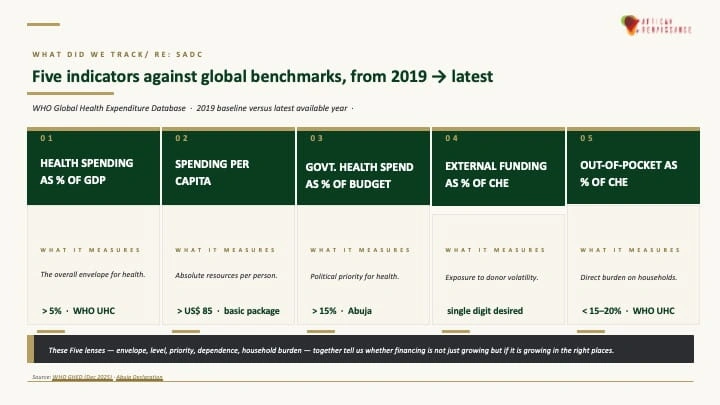
Together, these indicators assess whether countries are increasing investments in health, prioritising health within national budgets, reducing reliance on external assistance and protecting households from catastrophic healthcare costs.
The findings reveal both encouraging progress and persistent vulnerabilities. Five SADC countries Botswana, Eswatini, Lesotho, Namibia and South Africa have achieved the Abuja target of allocating at least 15 percent of government expenditure to health. Household financial protection has also improved considerably, with 13 of the 16 SADC Member States recording reductions in out-of-pocket expenditure, representing one of the region’s strongest health financing achievements.
However, significant challenges remain. Six countries continue to finance more than 40 percent of their health expenditure through external assistance, exposing their health systems to fluctuations in donor funding. These include Malawi, Mozambique, the Democratic Republic of Congo, Madagascar, Tanzania and Zimbabwe. At the same time, per capita health expenditure varies dramatically across the region from approximately US$842 in Seychelles and US$632 in Mauritius to only US$23 in the Democratic Republic of Congo and US$21 in Madagascar, representing a forty-fold difference in available resources for healthcare.
These findings illustrate that while many countries are moving in the right direction, substantial inequalities persist across Southern Africa, reinforcing the need for stronger domestic financing and regional solidarity.
The End of the Donor-Dependent Era.
A central theme throughout the Joint Meeting was the recognition that Africa has entered a fundamentally different financing environment.
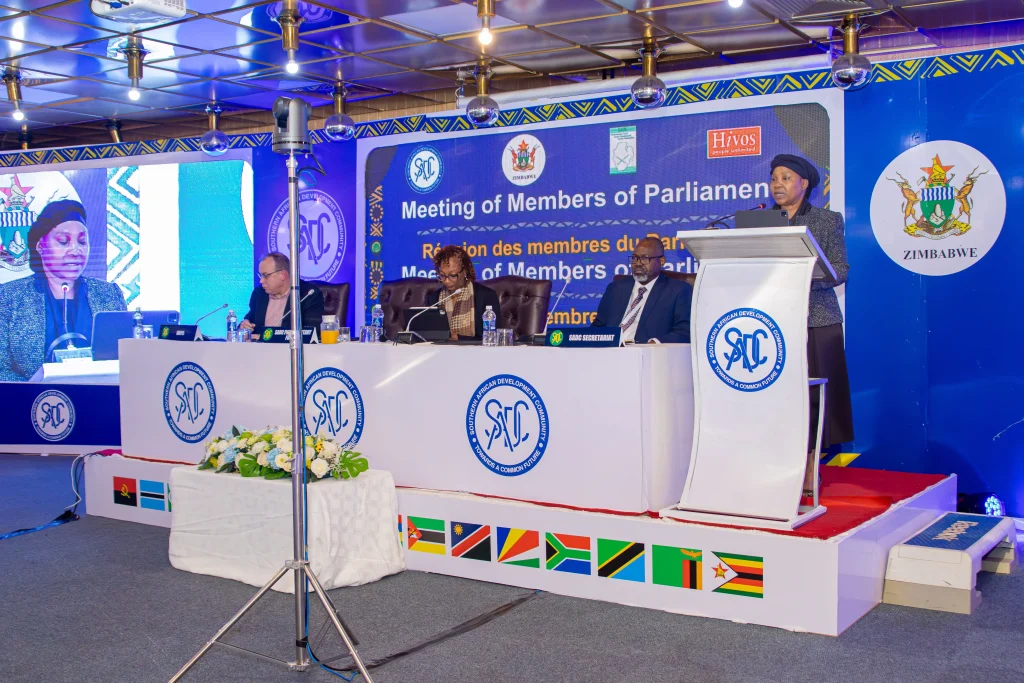
“The future of Africa’s health systems will depend less on external aid and more on domestic resource mobilisation, stronger governance and regional cooperation.” – HE Boemo Sekgoma, The Secretary General of the SADC Parliamentary Forum (SADC-PF).
The presentation highlighted that development assistance for health declined by approximately 70 percent between 2021 and 2025, while the January 2025 suspension of major bilateral health assistance exposed the vulnerabilities of highly donor-dependent health systems. The consequences were immediate.
According to ART’s research in the Dash-board presented , Mozambique experienced a 14 percent reduction in antiretroviral treatment initiations between February and May 2025, leaving approximately 15,000 fewer people starting treatment during that period. Malawi faced potential losses of approximately US$178 million in annual external HIV financing, at a time when debt servicing already consumed more than half of domestic revenue. These developments reinforced the urgent need for countries to strengthen nationally owned financing systems capable of withstanding future external shocks.
African Renaissance Trust’s Strategic Intelligence Brief reached a similar conclusion. It observed that SADC Member States are increasingly pursuing catalytic partnerships that strengthen domestic systems rather than requesting additional donor financing. The Brief concludes that health security, macroeconomic resilience and domestic resource mobilisation have become inseparable policy priorities, requiring integrated action across finance and health sectors.
Domestic Resource Mobilisation: The Foundation of Health Sovereignty.
Domestic resource mobilisation emerged as the defining policy priority of the Joint Meeting.
The Strategic Intelligence Brief notes that constrained fiscal space has become the principal barrier to development across the region. Governments are therefore prioritising domestic resource mobilisation, tax cooperation, innovative financing mechanisms, infrastructure investment and public financial management reforms.
African Renaissance Trust’s presentation showcased five country exemplars demonstrating different pathways towards sustainable financing.
Malawi illustrated how evidence-based dialogue between government, parliament and development partners resulted in approximately a 300 percent increase in domestic health allocations between 2019 and 2025, culminating in the Health Financing Act of 2023, which established frameworks for health insurance, public-private partnerships and innovative taxes.
Mauritius demonstrated how public-private partnerships mobilised approximately US$150 million in private investment between 2023 and 2025, while restructuring tax incentives enabled approximately US$52 million annually to support programmes for vulnerable populations. More than 99 percent of national health expenditure now comes from domestic sources, making Mauritius one of Africa’s strongest examples of health financing sustainability.
Mozambique focused on efficiency through regional cooperation, introducing its first National Health Financing Strategy in 2024, implementing digital public financial management through e-SISTAFE and participating in SADC pooled procurement expected to reduce medicine prices by up to 40 percent.
Zambia strengthened mandatory health insurance through the National Health Insurance Management Authority (NHIMA), enrolling approximately 3.4 million members and covering 4.6 million beneficiaries by late 2024 while increasing the health share of the national budget from 8 percent to 12 percent.
Tanzania demonstrated how phased reforms supported the implementation of mandatory Universal Health Insurance in January 2026. By the end of 2025, 10,032 of the country’s 13,776 health facilities had been registered, while average payment delays declined from 120 days to 55 days, improving provider confidence and financial sustainability.
Collectively, these examples illustrate that sustainable health financing can be achieved through different pathways, provided reforms are nationally owned, evidence-informed and institutionally coordinated.
Regional Cooperation: Expanding Fiscal Space Beyond National Borders.
The meeting also emphasised that domestic financing must be complemented by stronger regional cooperation.
The Strategic Intelligence Brief identifies regional initiatives such as the operationalisation of the SADC Regional Development Fund, regional tax cooperation, public financial management reforms and innovative financing as central to strengthening economic integration.
Similarly, discussions among Senior Health Officials highlighted investments in integrated disease surveillance, laboratory networks, One Health implementation, regulatory harmonisation and local pharmaceutical manufacturing as essential components of regional health security.
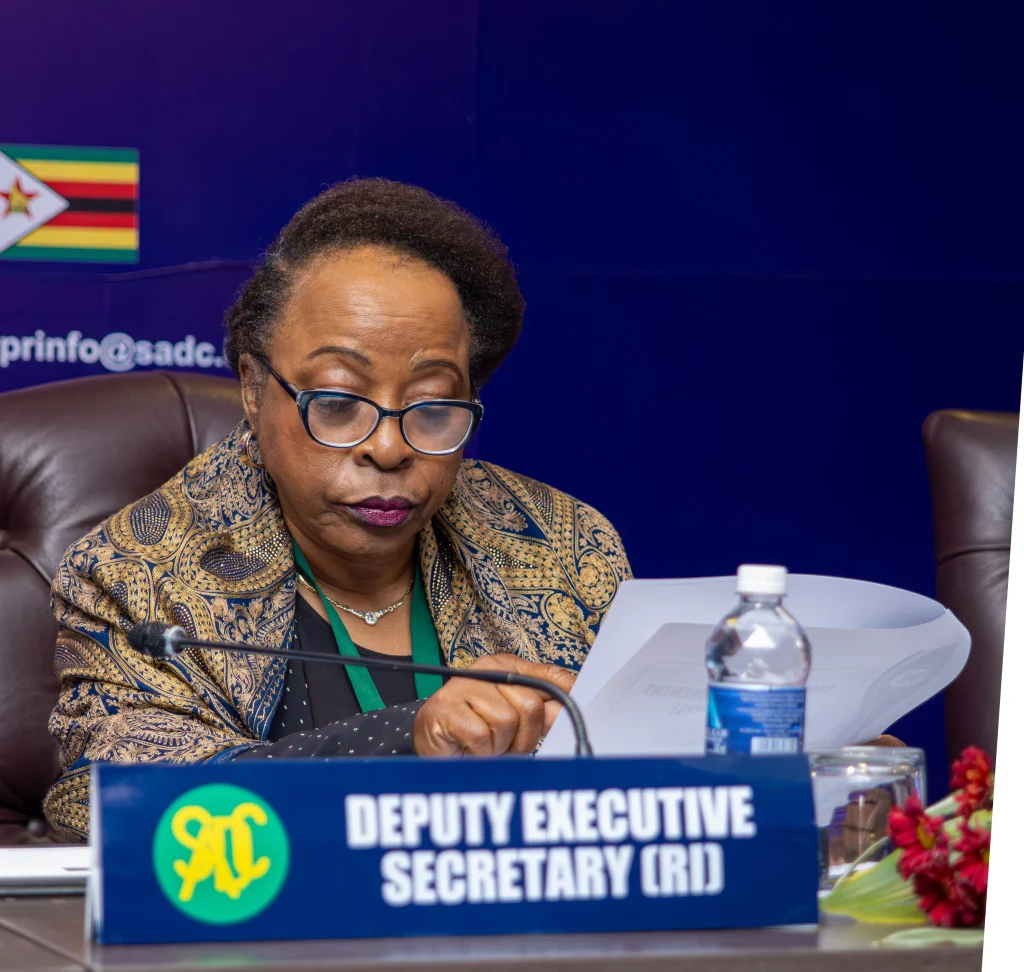
“Health is no longer viewed as a social expenditure—it is a strategic investment in economic resilience.” HE Angéle Makombo N’Tumba Angele, the SADC Deputy Executive Secretary for Regional Integration.
These initiatives recognise that many African countries cannot independently achieve economies of scale in pharmaceutical manufacturing, diagnostics or regulatory systems. Regional collaboration therefore provides an efficient pathway for reducing costs while improving resilience.
Accountability: Moving from Commitments to Results.
Financing alone cannot transform health systems. Sustainable financing requires strong accountability mechanisms capable of ensuring that commitments translate into measurable outcomes.
The discussions on National Accountability Mechanisms, Social Contracting and CSO Engagement with Ministries of Finance argued that while most SADC countries possess accountability institutions including parliaments, supreme audit institutions, public finance management systems and anti-corruption commissions these institutions often remain underutilised or insufficiently empowered to influence budget decisions.
The presentation proposed a practical accountability chain:
Commitment → Budget Allocation → Cash Release → Service Delivery → Results → Audit and Feedback → Corrective Action.
Accountability therefore extends beyond transparency. It ensures that financial resources are converted into improved health outcomes through continuous monitoring, evaluation and corrective action.
Social Contracting and Civil Society Engagement.
Another important message emerging from the Joint Meeting was the growing recognition that sustainable financing requires meaningful citizen participation.
Communities are increasingly recognised not simply as beneficiaries of health services but as partners capable of identifying service gaps, monitoring expenditure and informing investment decisions. Through community monitoring, social audits and participatory budgeting, civil society organisations generate evidence that strengthens investment prioritisation and improves public trust.
The presentation outlined essential requirements for effective social contracting, including enabling legislation, dedicated budget lines, transparent procurement systems, measurable performance indicators, predictable payment mechanisms and independent grievance mechanisms. These reforms enable governments to partner with community organisations while maintaining accountability and value for money.
African Renaissance Trust: A Strategic Partner for Africa’s Health Sovereignty.
The 2026 SADC Joint Meeting demonstrated that Africa’s future health financing agenda will increasingly depend on institutions capable of generating credible evidence, facilitating regional learning and supporting policy implementation.
African Renaissance Trust has positioned itself as one such institution. Through comparative benchmarking, strategic intelligence, commitment tracking and policy analysis, ART is helping governments move beyond political declarations towards practical reforms grounded in evidence and accountability.
Its work reflects a broader continental shift. Health is no longer viewed solely as a social sector expenditure but as a strategic investment in economic resilience, productivity and sustainable development. Likewise, Ministries of Finance and Ministries of Health are increasingly working together to design integrated financing strategies that strengthen national ownership while reducing dependence on unpredictable external financing.
Conclusion.
The 2026 SADC Joint Meeting of Ministers of Finance and Health marked a turning point in Southern Africa’s approach to sustainable health financing. Faced with declining donor assistance, rising debt and growing healthcare demands, Member States demonstrated a clear commitment to strengthening domestic resource mobilisation, improving accountability and expanding regional cooperation.
African Renaissance Trust made a significant contribution to these discussions through Dr. Caroline Kwamboka’s presentation on the SADC Health Financing Exemplars, which demonstrated how comparative evidence can support peer learning and policy reform across the region. Equally important, ART’s Strategic Intelligence Brief provided policymakers with forward-looking analysis of the economic, political and institutional reforms required to sustain health investments in an era of constrained fiscal space.
The discussions on national accountability mechanisms and social contracting further reinforced that sustainable health financing is not only about mobilising additional resources but also about ensuring that every dollar invested delivers measurable improvements in people’s lives through stronger institutions, transparent governance and meaningful citizen participation.
As Africa advances from commitments to implementation, African Renaissance Trust is playing an increasingly influential role in shaping evidence-based policy, strengthening finance-health collaboration and promoting accountable governance. The organisation’s participation at the 2026 SADC Joint Meeting demonstrates that African-led evidence is becoming an essential driver of health sovereignty, economic resilience and sustainable development across the continent.
Related stories
Article · Health Equity
African Renaissance Trust and the Jakaya Mrisho Kikwete Foundation Advancing Africa’s Health Financing Agenda: Evidence, Leadership and Accountability for Sustainable Health Systems.
Article · Continental Policy Developments
Strengthening Africa’s citizens voice in a Changing Global Order: African Renaissance Trust Leading Fireside of ECOSOCC Citizens’ Forum 2026.
Article · Press Releases