
Socio-Economic Justice
Strengthening Africa’s citizens voice in a Changing Global Order: African Renaissance Trust Leading Fireside of ECOSOCC Citizens’ Forum 2026.
25 July 2026 · Isabel Mwangi · 8 min read

These issues framed the ECOSOCC Citizens’ Forum Fireside Chat, “Africa’s Voice in a Changing Global Order: From Reform to Citizen-Centred Action held in Addis Ababa from 24 to 26 August 2026.” Moderated by Ms. Caroline Kwamboka, Executive Director of the African Renaissance Trust (ART), the dialogue convened Dr. Jide Okeke of UNDP Africa and Ms. Dadirayi Madzima, Executive Director of Rozaria Memorial Trust and GIMAC Young Women’s Cluster Lead. The discussion explored how Africa can translate ambitious reforms into practical, citizen-centred actions by strengthening governance, accountability and inclusive participation ensuring that Africa’s growing global influence delivers tangible benefits for its people.
Rather than revisiting familiar policy declarations, the Fireside Chat sought to answer a simple but profound question: How can Africa move from reform discussions to citizen-centred actions that improve people’s lives? The ECOSOCC Citizens’ Forum 2026 was more than a high-level dialogue. It was a practical demonstration of the ART Strategic Framework, which envisions “a continent where populations live healthy, empowered and dignified lives.” ART’s strategy recognises that sustainable development requires more than sound policies; it requires empowered citizens, evidence-informed dialogue and institutions that are accountable and responsive to the people they serve.
Closing the Gap Between Reform and Reality.
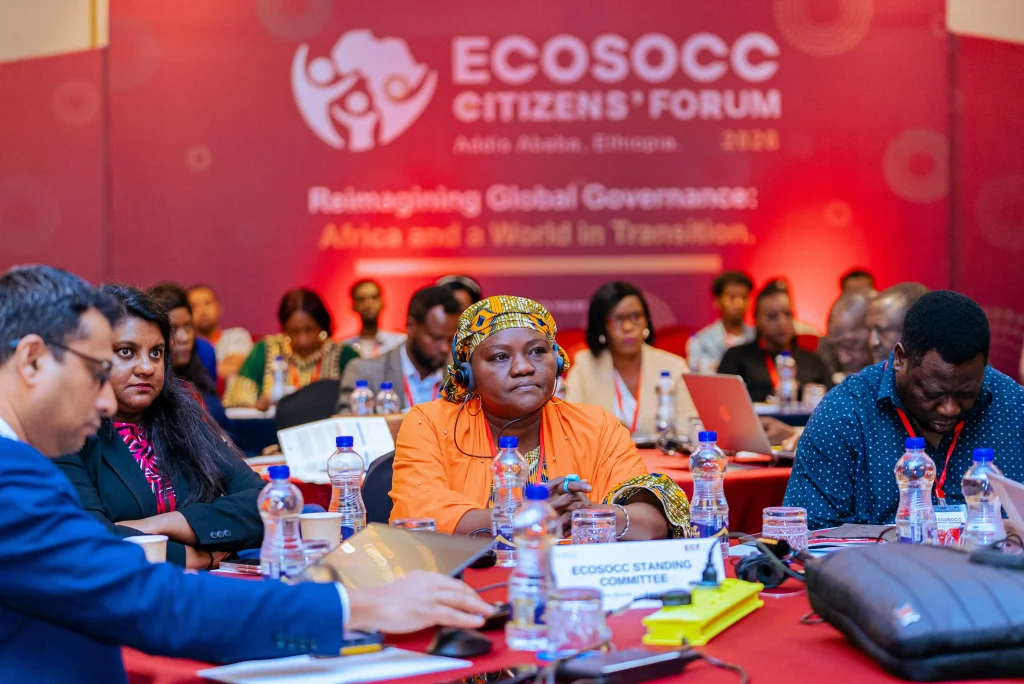
Throughout the discussion, participants acknowledged that Africa has no shortage of visionary frameworks. Agenda 2063, the African Continental Free Trade Area (AfCFTA), digital transformation strategies, governance reforms and numerous regional agreements provide a strong policy foundation for sustainable development. However, these commitments often remain disconnected from citizens’ everyday experiences because implementation is fragmented, accountability is weak and institutions frequently struggle to translate policies into practical outcomes.
The Fireside Chat challenged participants to rethink the purpose of reform itself. Successful governance should not be measured by the number of strategies adopted or institutions created but by whether citizens experience better jobs, stronger public services, greater economic opportunities and increased participation in decision-making. In this sense, the African Renaissance was presented not simply as a political aspiration but as a philosophy of self-determination where development is measured by the extent to which power, resources and opportunities are transferred to ordinary Africans.
This citizen-centred perspective marked an important shift in the conversation. Rather than asking what reforms governments should adopt, participants repeatedly asked what reforms would produce tangible improvements within the next twelve months and who should be responsible for delivering them.
Africa’s Demographic Dividend Requires Bold Action.
African median age is approximately 19 years and one in four people globally projected to be African by 2050, the continent possesses one of its greatest competitive advantages: its people. This demographic dividend can optimally be utilised if governments create opportunities for productive employment, entrepreneurship and innovation.
Youth unemployment was identified by the panel as one of Africa’s most urgent development and governance challenges. Millions of young Africans enter the labour market every year, but formal employment opportunities remain insufficient to meet growing demand. The discussion emphasised that governments alone cannot solve this challenge. Instead, they must create enabling environments that encourage entrepreneurship, attract private investment, strengthen skills development and expand access to finance and digital technologies.
Rather than treating young people as beneficiaries of development programmes, the discussion concluded that they should become active partners in designing economic policies, implementation strategies and accountability mechanisms. Youth possess the creativity, technological skills and entrepreneurial capacity needed to drive Africa’s transformation. Unlocking this potential requires investment in education, innovation ecosystems and institutions capable of supporting enterprise development.
Young Women Must Move from Participation to Power.
The Forum urged governments and institutions to move beyond symbolic inclusion towards meaningful participation in decision-making. Too often, young women are invited to conferences and consultations but remain excluded from budget processes, policy formulation and institutional leadership. Participants argued that genuine inclusion requires transferring authority, resources and influence not merely providing representation.
Special attention was given to rural young women and marginalised communities, who frequently face multiple barriers to participation, including unequal access to information, finance, digital platforms and decision-making spaces. Participants called for expanded access to understandable policy information, digital tools and public engagement processes that allow women and young people to shape policies affecting their lives.
The discussion also emphasised strengthening mechanisms through which youth organisations, women’s networks and civil society can monitor government commitments and contribute to accountability. By positioning citizens as co-authors rather than passive recipients of policy, governments can strengthen public trust while improving implementation.
Regional Integration as a Driver of Shared Prosperity
The Fireside Chat also highlighted regional integration as one of Africa’s most important opportunities for economic transformation. Panelists observed that many African economies remain constrained by fragmented markets, high financing costs, debt pressures and limited industrial capacity. Greater regional cooperation offers opportunities to overcome these constraints by strengthening regional value chains, expanding cross-border trade and coordinating economic policies.
Particular emphasis was placed on the African Continental Free Trade Area (AfCFTA), which was identified as one of the continent’s most transformative initiatives. If fully implemented, AfCFTA can expand markets for African businesses, stimulate industrialisation, promote value addition and create employment opportunities, particularly for young entrepreneurs and women-led enterprises. However, participants stressed that continental agreements alone are insufficient. National governments must align trade, industrial and employment policies with AfCFTA objectives while investing in infrastructure, logistics and institutional capacity to support implementation.
The discussion reinforced an important principle: regional integration is not an end in itself but a means of delivering shared prosperity for African citizens. The Forum also reinforced ART’s conviction that accountable governance begins with informed and organised citizens. When citizens have access to information, evidence and platforms for engagement, they become partners in monitoring public commitments, demanding transparency and holding institutions accountable.
Data, Accountability and Better Governance
Another recurring theme was the importance of African-generated data and sovereignty in strengthening governance and accountability. The Fireside Chat noted that effective policymaking depends upon reliable evidence capable of identifying inequalities, monitoring implementation and measuring results. Stronger national data systems are therefore essential for understanding employment trends, evaluating policy effectiveness and ensuring that development interventions respond to citizens’ realities.
The Forum also emphasised that data systems should capture the experiences of groups that are often excluded from national statistics, including women, young people, rural communities and informal-sector workers. Better evidence leads to better policies, stronger accountability and more inclusive development.
Beyond data collection, African data sovereignty was emphasized. Africa should be able to own, control, govern and benefit from the data generated within the continent, in accordance with African laws, values and development priorities. In addition the session discussed that accountability must become a continuous governance process linking policy design, budgeting, implementation, monitoring and public reporting. Governments should establish clear implementation frameworks with defined responsibilities, timelines, budgets and performance indicators to ensure that continental commitments are translated into measurable national outcomes.
Africa’s Voice in a Changing Global Order.
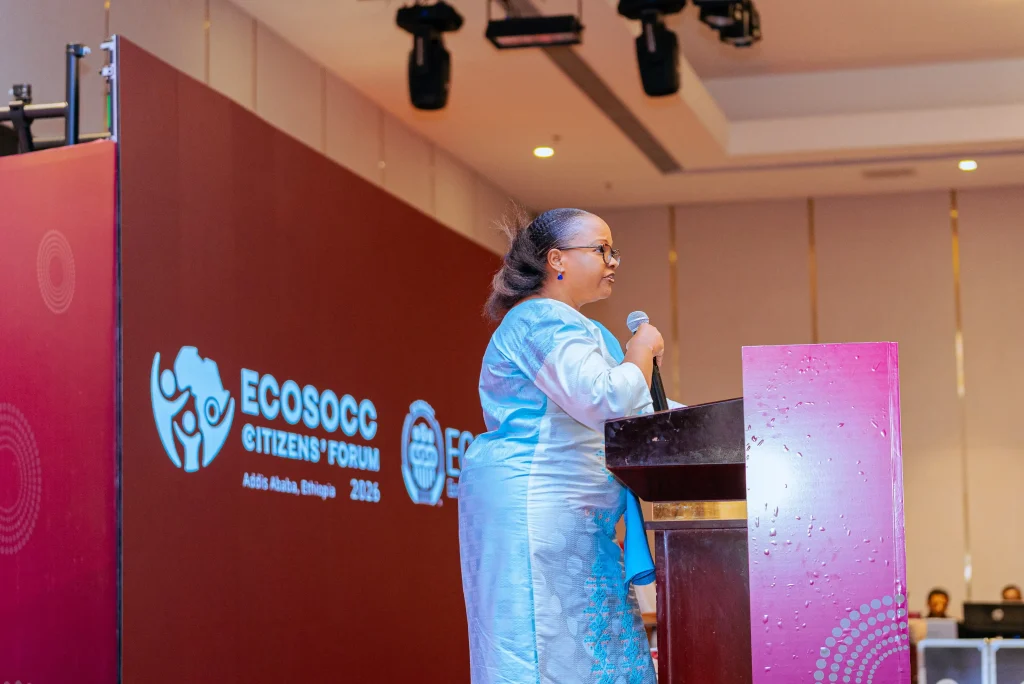
The Fireside Chat concluded by reflecting on Africa’s growing influence in global affairs. Discussions recognised that Africa is increasingly shaping international debates on governance, climate change, digital sovereignty, trade and sustainable development. However, strengthening Africa’s global voice requires unity, credible institutions and successful implementation of continental priorities. Africa’s influence abroad will ultimately depend on its ability to demonstrate results at home.
The discussion therefore called for visionary leadership capable of converting Africa’s demographic strengths, natural resources and digital transformation into inclusive growth and shared prosperity. Participants emphasised that governments, civil society, regional institutions and the private sector all have important roles in advancing this agenda through partnership and accountability.
Recommendations for Action.
The following recommendations were synthesized to guide African governments, institutions, and civil society:
- Prioritize Implementation and Accountability: Shift focus from policy formulation to measurable outcomes. Establish clear implementation frameworks with assigned budgets, timelines, and performance indicators.
- Invest in Youth Employment and Entrepreneurship: Create enabling environments for self-employment and small businesses through supportive regulations, access to finance, and investment in productive sectors.
- Meaningful Inclusion : Ensure young people and women are involved in the design and governing stages of digital systems and national budgets to ensure effective accountability.
- Accelerate the AfCFTA: Align national trade, industrial, and employment policies with AfCFTA objectives to support African production and job creation.
- Strengthen African Data Systems: Invest in the capacity to collect and analyze data that captures the experiences of marginalized groups, including rural women and informal-sector workers, to support evidence-based decision-making.
- Foster Visionary Leadership: Promote leadership capable of converting Africa’s demographic and natural-resource advantages into inclusive development and shared prosperity.
Conclusion.
Africa’s future depends not on the number of reforms adopted, but on how effectively those reforms improve the lives of its citizens. By connecting citizens, evidence, and policy, the African Renaissance Trust seeks to ensure that continental aspirations are translated into the healthy, empowered, and dignified lives envisioned for all Africans. By convening this important dialogue, the African Renaissance Trust contributed to advancing the conversation from institutional reform towards citizen-centred implementation, reinforcing the importance of translating continental aspirations into tangible outcomes for African citizens. As Africa’s voice continues to grow on the global stage, sustained progress will depend on the continent’s ability to transform shared commitments into measurable results through accountable leadership, inclusive partnerships and effective implementation.
Related stories
Article · Health Equity
African Renaissance Trust and the Jakaya Mrisho Kikwete Foundation Advancing Africa’s Health Financing Agenda: Evidence, Leadership and Accountability for Sustainable Health Systems.
Article · Press Releases
African Leaders unveil New Financing Dashboard and Call for Stronger Investment to Advance Africa’s Health Agenda
Article · Press Releases