
GE Gender Equality
27 January 2026 · Mylande Edoun ODJO · 5 min read
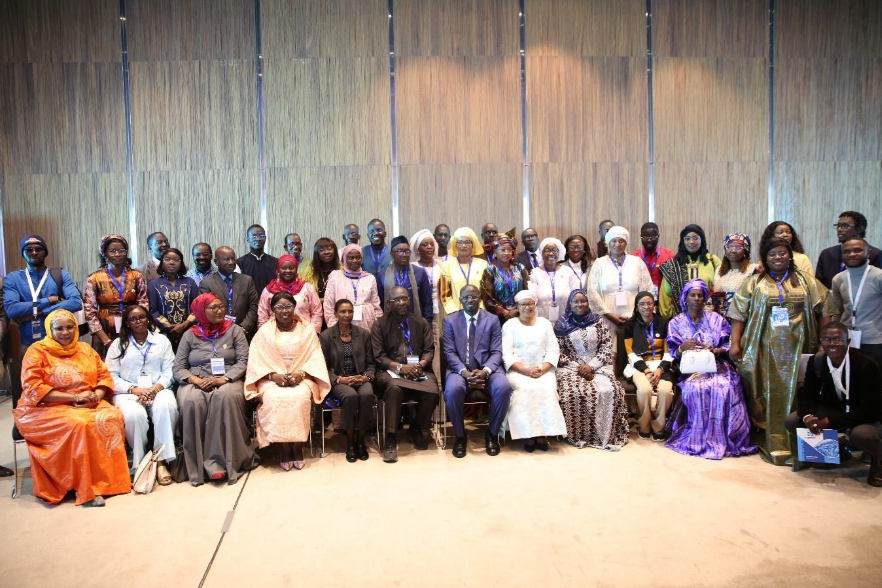
Held alongside the High-Level Preparatory Meeting for the 2026 United Nations Water Conference, the Renaissance Dialogue on Water and Sanitation in Africa convened in Dakar as an African-led platform for reflection, strategic alignment and collective action. The Dialogue was facilitated by African Renaissance Trust as a space grounded in African priorities, realities and leadership.
Inspired by the intellectual and political legacy of Cheikh Anta Diop, the Dialogue contributed to continental efforts to accelerate universal access to water and sanitation, recognized as fundamental human rights and as critical foundations for public health, social justice, gender equality, climate resilience and sustainable development.
From the outset, the Dialogue was guided by a clear conviction articulated by the Director of African Renaissance Trust:
Africa must be a voice, not a statistic.
Despite sustained national and continental efforts, the scale of the challenge remains stark. Hundreds of millions of Africans still lack access to safe drinking water and safely managed sanitation services. The burden continues to fall disproportionately on women and girls, rural populations, persons with disabilities and communities living in fragile and climate-vulnerable contexts.
Beyond the figures, these gaps translate into lost educational opportunities, preventable diseases, reduced productivity and violations of human dignity. As emphasized throughout the Dialogue, statistics alone do not tell Africa’s story; and they must not determine Africa’s future.
The Director of African Renaissance Trust underscored that Africa cannot continue to be defined by indicators and deficits. The continent must speak for itself, set its priorities and shape solutions rooted in its own realities. In this spirit, the Dialogue posed a central and urgent question:
Designed to move beyond declarations, the Dialogue placed delivery, accountability and citizen impact at the centre of discussions. Exchanges highlighted the pivotal role of parliamentarians as agents of change, positioned at the intersection of legislation, budget oversight and representation of citizens’ lived realities.
Participants emphasized that parliamentary responsibility extends far beyond the adoption of laws. It includes:
Strengthening legislative frameworks in the public interest,
Overseeing budget allocation and execution,
Conducting field missions to verify whether investments translate into tangible improvements in access to water and sanitation,
and ensuring transparency and follow-up long after budgets are approved.
Several parliamentarians shared concrete territorial experiences, including densely populated constituencies where access to potable water remains critically low despite existing policies and available budgetary information. These testimonies reinforced a shared understanding: policy success must ultimately be measured at the community level.
The Dialogue placed strong emphasis on citizen participation and inclusive governance as essential levers for sustainable water and sanitation systems. Speakers stressed that effective water governance cannot be achieved without:
Active parliamentary engagement,
Meaningful community participation,
and the full inclusion of women, youth and marginalized groups in decision-making processes.
Discussions highlighted the GEYSI approach (Gender Equality, Youth and Social Inclusion) promoted by African Renaissance as an operational framework for embedding inclusion throughout the policy cycle; from design and budgeting to implementation and monitoring. Aligned with African Union priorities, GEYSI was presented as a practical tool to bridge the persistent gap between political commitments and lived realities.
The Dialogue also benefited from the perspective of the Cabinet Secretary for Water, Sanitation and Irrigation of the Republic of Kenya, Eng. Eric Muriithi Mugaa, who underscored the urgency of action in a context where most Africans still lack access to safely managed sanitation.
He stressed that these figures represent real lives, particularly women, youth, persons with disabilities and communities facing compounded vulnerabilities due to climate change and fragility. The Minister reaffirmed the indispensable role of parliamentarians as legislators, budget overseers and direct representatives of citizens. Parliamentary leadership, he noted, is essential to ensure that water and sanitation budgets are not only allocated, but effectively disbursed, monitored and translated into equitable outcomes on the ground.
He further welcomed the GEYSI approach as a governance framework capable of operationalizing inclusion and accountability across the entire water and sanitation policy cycle.
Discussions converged on the need for a multi-level parliamentary strategy articulated across:
National level: strengthening parliamentary oversight, reducing territorial inequalities and prioritizing water and sanitation in national budgets.
African Union level: harmonizing legislation, reinforcing accountability mechanisms and fostering inter-parliamentary cooperation.
Continental level: positioning water as a pillar of peace, development and African sovereignty, while strengthening parliamentary water diplomacy.
Participants also highlighted the importance of enhanced coordination between parliaments, civil society and executive institutions—particularly in integrated water resources management, territorial planning and climate adaptation.
A key outcome of the Dialogue was the articulation of collective commitments, referred to as the Dakar Consensus, reflecting a shared African vision for water and sanitation governance. These commitments include:
institutionalizing a permanent African framework for parliamentary and citizen coordination,
formalizing political commitment through a shared African declaration on water and sanitation,
strengthening parliamentary leadership through dedicated networks,
mobilizing sustainable and equitable resources focused on vulnerable territories,
reinforcing accountability through citizen-led monitoring mechanisms,
measuring and comparing progress using harmonized indicators,
and projecting a unified African voice in global water and climate forums, supported by systematic post-conference follow-up.
A shared conviction
The Renaissance Dialogue reaffirmed a powerful collective conviction:
Africa has the leadership, the frameworks and the capacity to deliver, provided accountability remains central.
By anchoring water and sanitation governance in parliamentary leadership, citizen participation and inclusive systems, the Dialogue marked a strategic shift from fragmented initiatives toward coherent, accountable and people-centred action, ensuring that commitments made at continental and global levels translate into tangible improvements in the daily lives of African communities.
Mylande Edoun ODJO
African Renaissance Trust
Article · Gender Equality
Article · Health Equity
Article · Continental Policy Developments