
Health Equity
African Renaissance Trust and the Jakaya Mrisho Kikwete Foundation Advancing Africa’s Health Financing Agenda: Evidence, Leadership and Accountability for Sustainable Health Systems.
26 July 2026 · Elie Kwiravusa · 15 min read

Introduction.
The African Union Extraordinary Summit on Health, held in Accra, Ghana from 21 to 22 July 2026, marked a defining milestone in Africa’s pursuit of resilient, equitable and sustainably financed health systems. At a time when the continent faces declining external health assistance, increasing fiscal pressures and growing demands for quality healthcare, African leaders reaffirmed their collective commitment to domestic resource mobilisation, stronger health systems, local manufacturing, and universal health coverage. Yet, as the Summit concluded, one reality became increasingly evident: declarations alone will not transform health outcomes.
It is within this context that the High-Level Interactive Policy Dialogue on Advancing Africa’s Health Agenda through Domestic Financing, Accountability and Strategic Innovations, jointly convened by the African Renaissance Trust (ART) and the Jakaya Mrisho Kikwete Foundation (JMKF), on 20th July 2026, has emerged as one of the Summit’s most enduring policy contributions. Rather than serving as a parallel event, the Dialogue provided the intellectual foundation, strategic recommendations and practical implementation pathways that continue to shape Africa’s health financing agenda beyond the Extraordinary Summit. The Dialogue’s report (here the link) makes clear that its purpose was not to generate another declaration, but to identify concrete actions capable of accelerating implementation of existing African Union commitments through stronger domestic financing, accountable governance, strategic innovation and partnerships.
A Strategic Partnership for Africa’s Health Transformation.
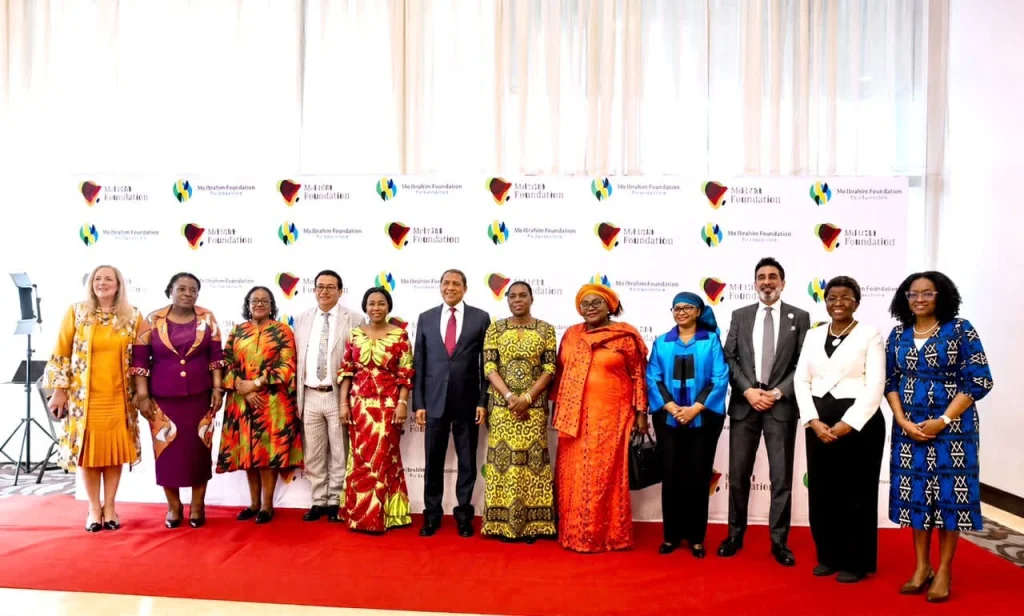
The collaboration between the African Renaissance Trust and the Jakaya Mrisho Kikwete Foundation represented much more than a joint convening arrangement. It brought together two institutions with complementary strengths and a shared vision of advancing Africa’s health sovereignty.
African Renaissance Trust has emerged as a leading African policy and knowledge institution specialising in health financing, governance, accountability and strategic advocacy. Through comparative policy research, regional dialogue and innovative decision-support tools, ART works with governments, the African Union, Regional Economic Communities and development partners to strengthen evidence-based policymaking and accelerate implementation of continental commitments.
The Jakaya Mrisho Kikwete Foundation brought an equally important dimension to the Dialogue through its emphasis on political leadership, implementation and sustainable development. Guided by its Founder and Patron, H.E. Dr. Jakaya Mrisho Kikwete, former President of the United Republic of Tanzania, the Foundation has consistently championed investments in health, education, youth empowerment and leadership development across Africa. President Kikwete’s lifelong commitment to improving maternal and child health, strengthening public institutions and promoting African-led development gave the Dialogue exceptional political credibility.
Together, ART and JMKF created a unique platform where political leadership was informed by credible evidence, technical innovation was connected to public policy, and continental aspirations were translated into practical recommendations for governments, regional institutions and development partners. The Dialogue therefore demonstrated a model of African leadership in which knowledge, political commitment and implementation reinforce one another in pursuit of sustainable development.
From Political Commitment to Practical Implementation.
Over the past two decades, African Heads of State and Government have adopted the Abuja Declaration, Agenda 2063, the Catalytic Framework to End AIDS, Tuberculosis and Eliminate Malaria, the Africa Leadership Meeting (ALM) Declaration on Investing in Health, the Lusaka Agenda and, most recently, the outcomes of the Extraordinary Summit on Health. Collectively, these frameworks provide a comprehensive vision for achieving Universal Health Coverage, strengthening health security and building resilient health systems.
The challenge, participants argued, lies not in adopting additional declarations but in ensuring that existing commitments are financed, implemented and monitored. Governments are encouraged to move beyond policy formulation towards stronger domestic resource mobilisation, improved expenditure efficiency, institutional accountability and measurable results. This implementation agenda framed every discussion throughout the Dialogue.
Commissioner Amma Twum-Amoah: Health is an Investment in Africa’s Future.
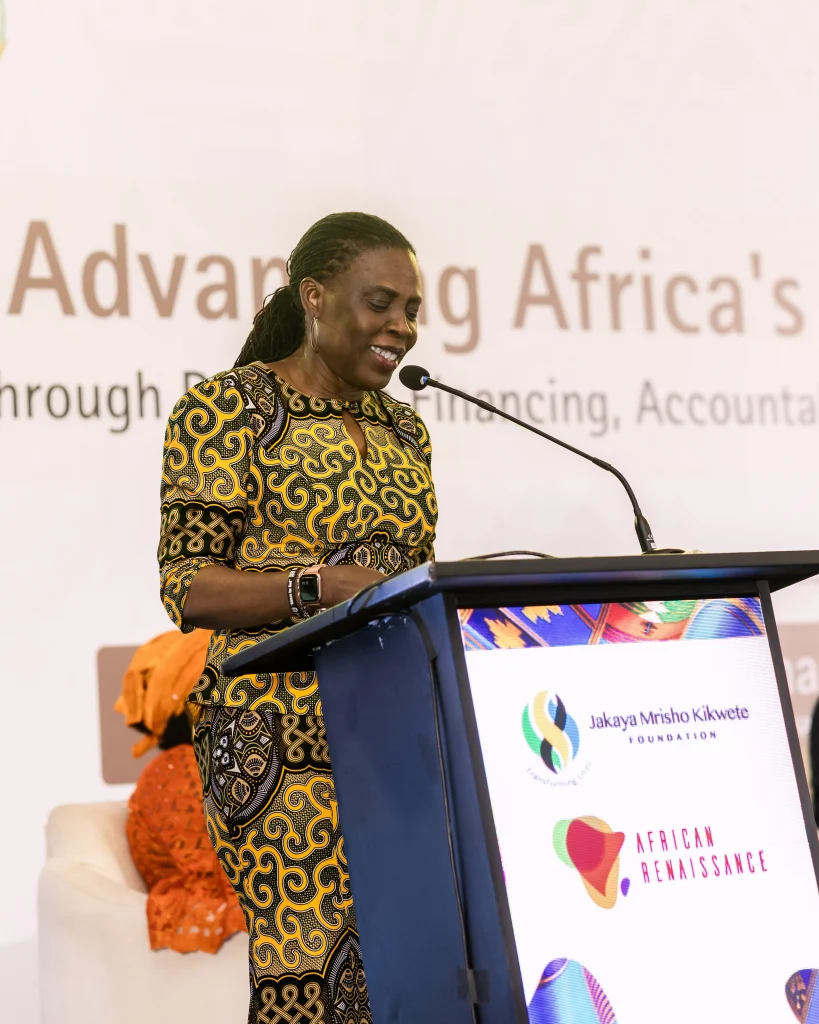
In her opening address, H.E. Ambassador Amma Twum-Amoah, African Union Commissioner for Health, Humanitarian Affairs and Social Development, articulated the broader continental vision that would shape the Dialogue’s deliberations. Her remarks challenged participants to fundamentally rethink the way health is financed and governed across Africa (here is the link).
Drawing on the commitments adopted during the Africa Leadership Meeting on Investing in Health, the Commissioner reminded participants that African leaders had already agreed to strengthen domestic resource mobilisation, improve public financial management, expand collaboration between Ministries of Health and Ministries of Finance, promote innovative financing and institutionalise accountability. She observed that Africa possesses no shortage of strategies or declarations. What is required is disciplined execution supported by political leadership, evidence-based policymaking and accountable institutions through budgetary decisions, policy reforms and measurable improvements in health outcomes rather than through declarations alone.
Her remarks also reflected a broader shift in continental thinking. As development assistance declines and countries face increasing fiscal constraints, domestic financing can no longer be viewed as optional. It has become the foundation upon which Africa’s health sovereignty will be built. This requires stronger tax systems, improved expenditure efficiency, strategic purchasing, better coordination between finance and health ministries and greater engagement with the private sector.
President Jakaya Kikwete: Africa’s Challenge is not ideas it is delivery.
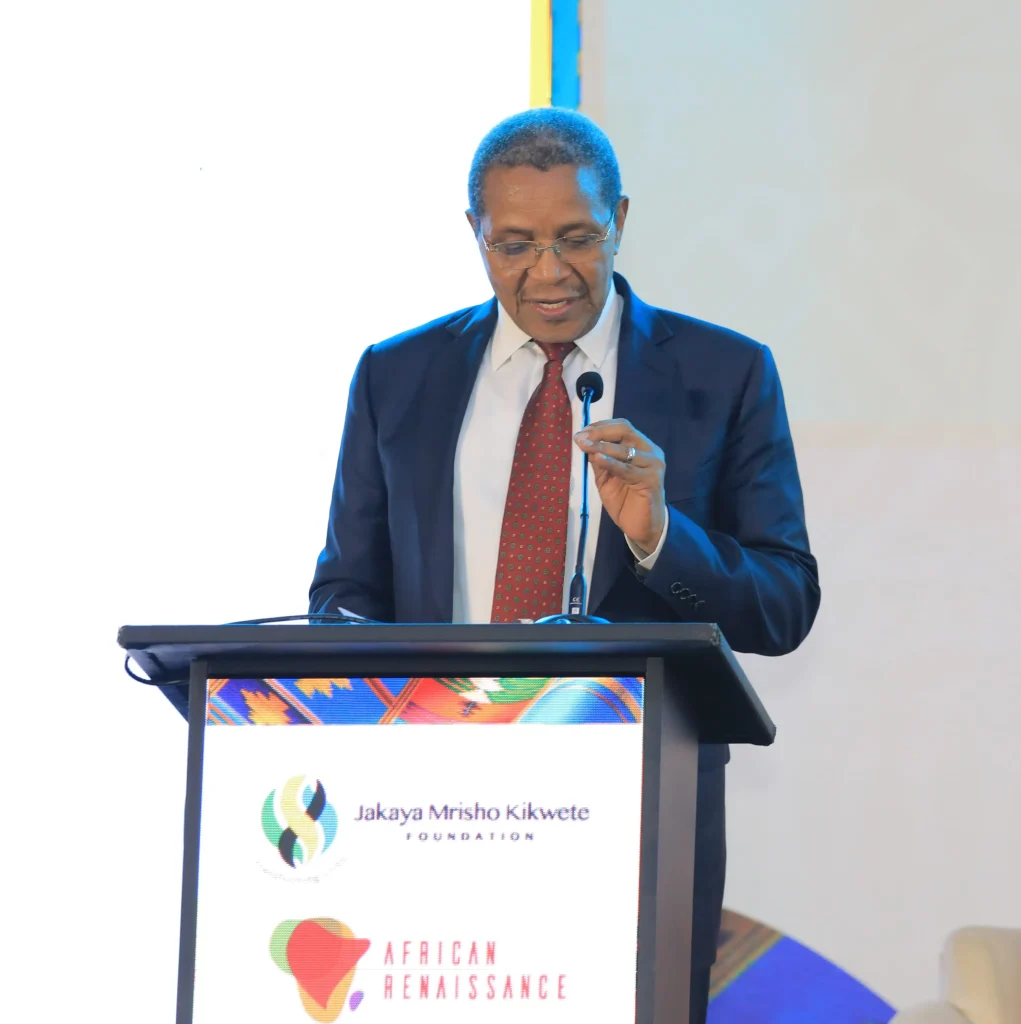
Commissioner Twum-Amoah established the continental policy framework, H.E. Dr. Jakaya Mrisho Kikwete provided the Dialogue’s philosophical centrepiece. Reflecting on decades of public service and continental leadership, President Kikwete challenged one of the most persistent misconceptions surrounding African development that the continent lacks ideas or innovation.
President Kikwete reflected on Tanzania’s experience in improving maternal and child health to demonstrate that sustainable progress is achieved not through isolated projects but through long-term investment in national institutions, research, innovation and partnerships. He described how collaboration between governments, universities, researchers and frontline health workers had generated practical solutions that significantly reduced maternal and newborn mortality.
Drawing on the lessons of the COVID-19 pandemic, President Kikwete also highlighted the vulnerability created by Africa’s dependence on imported vaccines, medicines and essential medical supplies. The pandemic exposed weaknesses in global supply chains and demonstrated the risks of relying on external markets during periods of crisis. For Africa to achieve genuine health sovereignty, he argued, the continent must invest in local pharmaceutical manufacturing, strengthen regulatory systems, support scientific research and accelerate the operationalisation of the African Medicines Agency (AMA). These investments are not only health priorities but strategic economic imperatives and improve resilience against future public health emergencies.
President Kikwete also emphasised the importance of accountability in sustaining political commitment. Evidence, monitoring and transparency are indispensable components of effective governance. It was in this context that he strongly endorsed the Health Financing Insights Dashboard, describing it as a practical instrument that can help governments monitor commitments, strengthen accountability and improve decision-making. He challenged African leaders to move beyond aspirational targets by ensuring that commitments are reflected in budgets, budgets are translated into programmes, and programmes deliver measurable results for citizens.
Ghana Demonstrates the Accra Reset in Action.
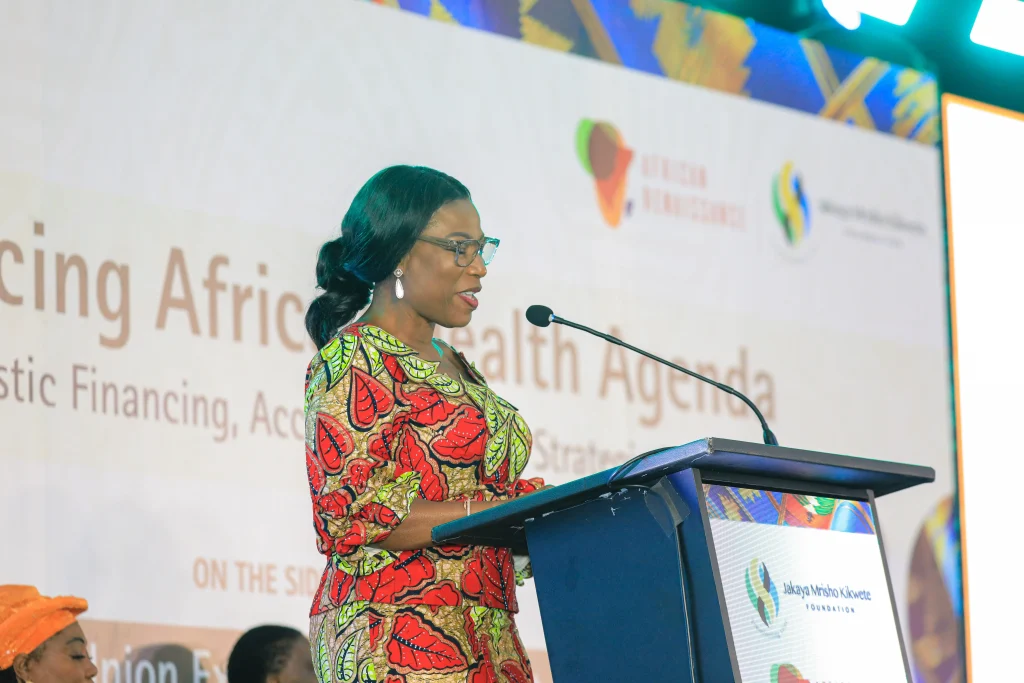
While continental leaders articulated the broader vision, Prof. Grace Ayensu-Danquah, Ghana’s Deputy Minister of Health, demonstrated how that vision is already being translated into national policy. She acknowledged that Africa is entering a new development financing landscape characterised by declining external assistance and increasing domestic responsibility. One of the flagship reforms highlighted was the Ghana Medical Trust Fund, widely known as “Mahama Cares.” The initiative has been designed to improve access to diagnosis and treatment for chronic non-communicable diseases, including cancers, cardiovascular diseases and kidney conditions. Beyond financing treatment, the Trust Fund also supports specialist infrastructure, research and workforce development, recognising that Africa’s changing disease profile requires sustained investment in specialised care alongside primary healthcare.
Complementing this initiative is Ghana’s ambitious Free Primary Healthcare Programme, which seeks to strengthen preventive healthcare while reducing financial barriers to essential services. The programme includes maternal and child healthcare, immunisation, hypertension screening, diabetes screening, cervical and breast cancer screening and expanded community outreach services. Implementation has begun in 150 districts, reflecting the Government’s commitment to phased, evidence-informed reform rather than isolated pilot projects. Prof. Ayensu-Danquah emphasised that prevention remains one of the most cost-effective investments governments can make, reducing future treatment costs while improving population health.
She further announced a US$50 million investment in Ghana’s National Vaccine Institute, aimed at strengthening vaccine research, expanding local manufacturing capacity and supporting pharmaceutical innovation. Combined with Ghana’s attainment of WHO Maturity Level 3 regulatory status, these investments position the country to contribute significantly to Africa’s aspirations for pharmaceutical self-reliance and regional health security.
Importantly, Prof. Ayensu-Danquah welcomed the Health Financing Insights Dashboard developed by ART, recognising it as an important accountability mechanism capable of helping governments monitor progress against health financing commitments and improve evidence-based policymaking. Her endorsement demonstrated growing political support for the Dashboard as a continental public good rather than simply another reporting platform.
The Health Financing Insights Dashboard: Transforming Accountability.
Visit https://dashboard.the-african-renaissance.org/
One of the Dialogue’s most significant contributions was the demonstration of the Health Financing Insights Dashboard, presented by Ms. Caroline Kwamboka, Executive Director and Trustee of African Renaissance Trust.
The Dashboard represents far more than a repository of statistics. Developed in response to the African Union’s growing emphasis on domestic resource mobilisation and accountability, the Dashboard consolidates data from major continental commitments into a single, accessible platform. The platform tracks 27 core indicators spanning domestic health financing, budget allocations, health expenditure, financial protection, disease burden, service coverage and implementation performance. It enables policymakers to benchmark progress against peer countries, identify implementation gaps and monitor trends over time. Rather than creating additional reporting obligations, it integrates existing information to support more strategic decision-making across government.
Participants viewed the Dashboard as an important innovation because it shifts accountability from retrospective reporting towards proactive management. Ministries of Finance can better understand the return on health investments, while Ministries of Health gain stronger evidence for advocating increased domestic allocations. Parliamentarians, civil society organisations and development partners can likewise use the platform to strengthen oversight and support evidence-informed dialogue.
The Dialogue Report identifies the Dashboard as one of the event’s major outcomes and encourages Member States to adopt and utilise it as part of their national accountability architecture. This recognition reflects ART’s growing role not merely as a policy research institution but as a developer of practical governance solutions that support implementation across Africa.
Domestic Financing: the Foundation of Health Sovereignty.
A central conclusion emerging from the Dialogue was that health sovereignty begins with financing sovereignty.
Participants acknowledged that declining Official Development Assistance is reshaping the financing landscape across Africa. The Dialogue therefore called for a renewed commitment to domestic resource mobilisation supported by stronger tax administration, improved public financial management, innovative financing mechanisms and more efficient use of available resources.
The Dialogue Report identifies several strategic priorities for Member States. These include increasing national budget allocations to health, improving expenditure efficiency, diversifying financing sources, strengthening collaboration between Ministries of Health and Ministries of Finance, protecting primary healthcare investments and reducing excessive dependence on donor financing. Participants also highlighted opportunities to expand social health insurance, strengthen strategic purchasing, introduce innovative health taxes where appropriate and improve value for money across public expenditure.
Importantly, discussions emphasised that domestic financing should not be measured solely by the volume of resources mobilised but by the effectiveness with which those resources are utilised. Efficiency, transparency and accountability were repeatedly identified as essential complements to increased investment.
Innovation, Regional Cooperation and Africa’s Health Sovereignty.
Afrom the 2026 SADC Joint Meeting of Ministers of Finance and Health, held in Harare from 01 to 03 July 2026, a defining feature of the Dialogue was its recognition that sustainable health financing cannot be separated from innovation and regional integration. Participants agreed that while increasing domestic investment is essential, financing alone will not deliver resilient health systems unless it is accompanied by investments in research, digital technologies, local manufacturing and stronger regional institutions. The Dialogue therefore positioned innovation as a strategic pillar of Africa’s health sovereignty rather than simply a technological aspiration.
Regional cooperation was equally emphasised as an indispensable component of implementation. Participants recognised that many African countries, acting individually, may lack sufficient market size, technical expertise or investment capital to establish globally competitive pharmaceutical industries or advanced regulatory systems. Regional collaboration therefore offers opportunities to harmonise regulations, pool procurement, strengthen supply chains, promote technology transfer and reduce the costs of medicines and health commodities.
These discussions reflected a broader understanding that Africa’s health future will increasingly depend upon collective action. Investments in disease surveillance, digital health, laboratory systems, workforce development and pharmaceutical manufacturing can generate greater impact when pursued through regional partnerships. The Dialogue therefore reinforced the role of the African Union and Regional Economic Communities in coordinating implementation while encouraging Member States to view health not only through national lenses but as a continental public good.
The Private Sector and Civil Society: Essential Partners in Implementation.
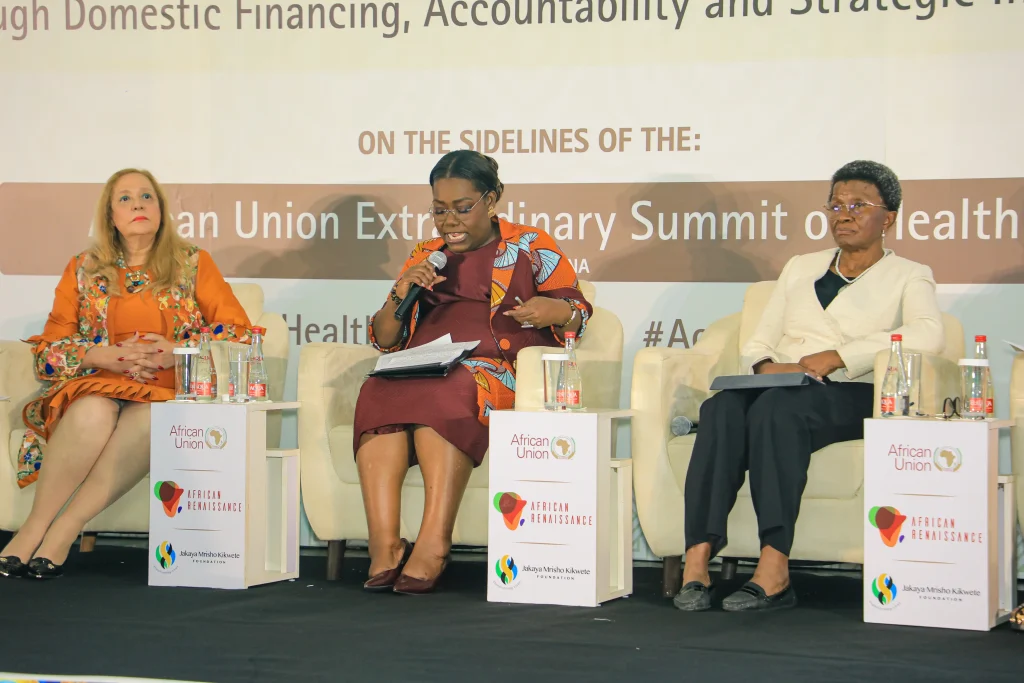
Another defining strength of the Dialogue was its emphasis on inclusive partnerships. Throughout the discussions, participants challenged the notion that governments alone can finance or deliver Africa’s health agenda. Instead, sustainable implementation requires coordinated action involving governments, development partners, research institutions, civil society organisations, philanthropic foundations and the private sector.
During the fireside dialogue, Dr. Amany Asfour, President of the Africa Business Council, argued that Africa’s private sector should be viewed not simply as a source of additional financing but as an engine of innovation, investment and economic transformation. She highlighted opportunities for expanding private investment in pharmaceutical manufacturing, digital health, health infrastructure and research while emphasising that predictable policy environments and transparent regulatory systems are essential for attracting long-term investment.
Similarly, Dr. Joy Phumaphi, Executive Secretary of the African Leaders Malaria Alliance (ALMA), emphasised that accountability should not be regarded as a compliance exercise but as a leadership tool that helps governments improve performance and accelerate results. Drawing upon ALMA’s experience with continental scorecards, she demonstrated how data-driven accountability mechanisms can stimulate political ownership, encourage peer learning and strengthen public confidence. Her intervention reinforced the Dialogue’s broader message that evidence should drive policy decisions and resource allocation.
Hon. Nana Oye Bampoe Addo, Deputy Chief of Staff at the Office of the President of Ghana, reflected on the importance of whole-of-government approaches that integrate health within broader national development planning. She noted that sustainable financing depends not only on increased allocations but also on strong governance, cross-sectoral collaboration and long-term political commitment. Her contribution illustrated the growing recognition that health outcomes are shaped by decisions extending well beyond Ministries of Health.
For H.E. Prof. Sarah Anyang Agbor, former African Union Commissioner and Advisory Board Member of African Renaissance Trust, implementation must remain people-centred. She called for greater inclusion of women, young people, communities and civil society organisations in health governance, arguing that sustainable reforms require meaningful citizen participation. She emphasised that accountability is strengthened when communities become active partners in monitoring progress and shaping policy rather than passive recipients of services.
Collectively, these interventions reinforced a central conclusion of the Dialogue: implementation is a shared responsibility that requires partnerships extending across government, academia, business and civil society.
From Dialogue to Action: A Practical Implementation Roadmap.
One of the Dialogue’s most significant achievements was its transition from policy discussion to practical action. The final report did not merely summarise deliberations; it identified an implementation roadmap designed to support Member States in translating continental commitments into measurable progress.
Among its principal recommendations were:
- Increase domestic resource mobilisation through stronger tax systems, innovative financing mechanisms and improved fiscal planning for health.
- Strengthen collaboration between Ministries of Finance and Ministries of Health, recognising that sustainable health financing depends upon integrated planning and budgeting.
- Institutionalise accountability mechanisms, including performance monitoring, public reporting and evidence-based decision-making.
- Expand strategic investments in primary healthcare, prevention and health promotion while protecting vulnerable populations from catastrophic health expenditure.
- Accelerate pharmaceutical manufacturing, research and innovation through stronger partnerships with the private sector and academic institutions.
- Promote regional cooperation on regulatory harmonisation, procurement, digital health and disease surveillance.
- Leverage digital accountability platforms, including the Health Financing Insights Dashboard, to monitor implementation and improve transparency.
Unlike many policy reports that conclude with broad aspirations, the Dialogue Report emphasised implementation as an ongoing process requiring political leadership, institutional reform and continuous learning. It also recognised that implementation should be monitored through measurable indicators, enabling governments to evaluate progress, identify gaps and make timely policy adjustments.
Beyond the Extraordinary Summit.
The African Union Extraordinary Summit on Health has now become part of Africa’s policy history. Its declarations have been adopted, its ambitions clearly articulated and its priorities reaffirmed. Yet, as repeatedly emphasised throughout the Dialogue, the true measure of success will not be the number of commitments endorsed in Accra but the extent to which those commitments are translated into stronger health systems, sustainable financing and improved health outcomes across Africa’s 55 Member States.
The High-Level Interactive Policy Dialogue convened by the African Renaissance Trust and the Jakaya Mrisho Kikwete Foundation demonstrated that the foundations for this transformation already exist. Through political leadership, strategic partnerships, evidence-based policymaking and practical accountability mechanisms, the Dialogue provided a roadmap for moving beyond aspiration towards implementation.
The messages delivered by H.E. Ambassador Amma Twum-Amoah, H.E. Dr. Jakaya Mrisho Kikwete, Prof. Grace Ayensu-Danquah, Dr. Joy Phumaphi, Dr. Amany Asfour, Hon. Nana Oye Bampoe Addo and H.E. Prof. Sarah Anyang Agbor converged around a common principle: Africa’s future health security depends upon domestic leadership, sustainable financing, accountable institutions and partnerships capable of transforming commitments into measurable results.
For the African Renaissance Trust and Jakaya Mrisho Kikwete Foundation, this Dialogue represents far more than the successful organisation of a high-level event. It reflects the organisation’s emergence as a trusted continental policy institution that generates strategic intelligence, develops innovative accountability tools and convenes decision-makers around practical solutions. Through initiatives such as the Health Financing Insights Dashboard, ART is helping governments connect political commitments with measurable implementation while strengthening evidence-based decision-making across Africa.
Together, ART and JMKF have established a model of African leadership grounded in partnership, evidence and implementation. Their collaboration illustrates how African institutions can shape continental policy, support governments in delivering reforms and strengthen Africa’s capacity to finance and govern its own development agenda.
Related stories
Article · Institutional News
From Aid Dependency to Health Sovereignty: African Renaissance Trust’s Leadership at the 2026 SADC Joint Meeting of Ministers of Finance and Health.
Article · Continental Policy Developments
Strengthening Africa’s citizens voice in a Changing Global Order: African Renaissance Trust Leading Fireside of ECOSOCC Citizens’ Forum 2026.
Article · Press Releases