Benefits of demystifying continental policy organs in Africa to advance health equity
Demystifying continental policy organs in Africa is a crucial step towards advancing health equity on the continent. These policy organs play a significant role in shaping healthcare strategies, resource allocation, and decision-making processes that directly impact the well-being of African populations. However, understanding and engaging with these complex structures can present challenges due to issues of transparency, accessibility, and the intricacies of policy formulation. In this article, we explore the benefits of demystifying continental policy organs in Africa, examining the importance of transparency, strategies for enhancing understanding, and the potential impact on promoting health equity across the region.
<h2>Introduction to Continental Policy Organs in Africa</h2>
In the bustling landscape of African governance, continental policy organs play a crucial role in shaping regional policies and initiatives. These organs serve as key decision-making bodies that influence various sectors, including health, across the continent.
<h3>Understanding the Role of Continental Policy Organs</h3>
Continental policy organs act as forums where African countries come together to discuss, strategize and collaborate on issues of regional importance. These organs provide a platform for collective decision-making and implementation of policies that impact the lives of millions of people in Africa.
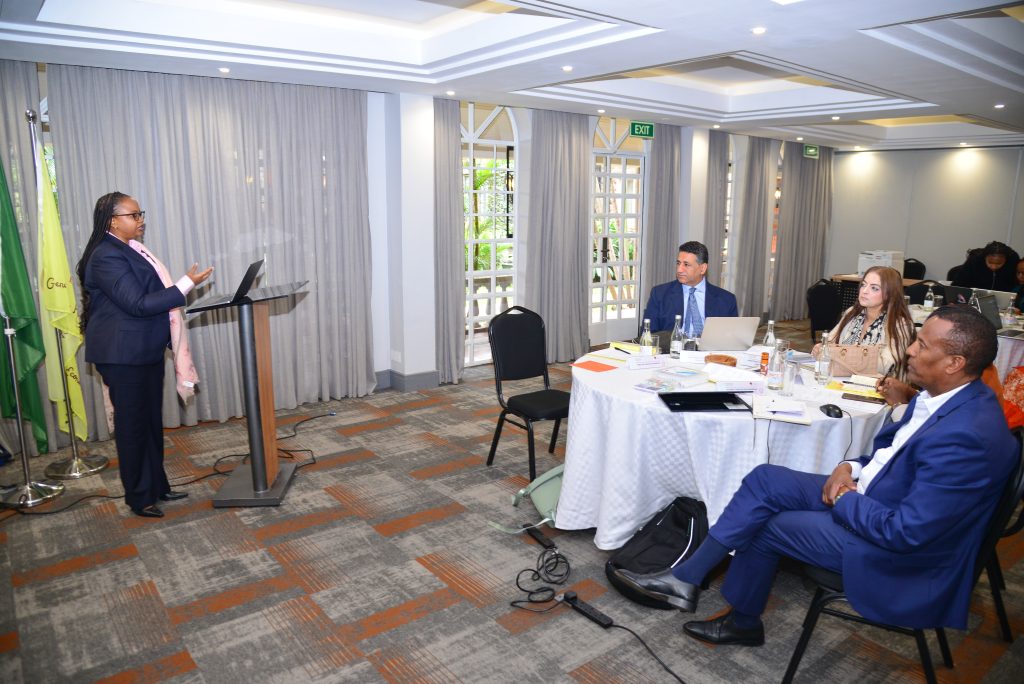
Caroline Kwamboka N., Director of The African Renaissance Trust, presents her submission.
The African Union’s 2025–2026 theme, “Justice for Africans and People of African Descent Through Reparations,” marks a watershed moment in Africa’s pursuit of justice and equity. This theme carries a message of a justified legal claim and an asserted moral petition. It is not a plea for aid, it is a warranted demand for what is owed.
The African Union Commission (AUC), in partnership with the African Renaissance Trust (AR), has taken a decisive step to operationalise this vision. At the landmark Ideation Workshop held in Nairobi on 4th to 5th August 2025, stakeholders transformed the concept of reparations into an actionable roadmap. This initiative lays the foundations for a multigenerational mission to correct historical injustices and construct a just, prosperous, and self-determined African future.
An Obligation, Not Charity
At the heart of this mission is a dominant call to re-frame the reparation discussion. For too long, the conversation has been suppressed by the perception of charity. The workshop’s guiding principle is that reparations are an obligation, not charity! This is a request for justice. It is rooted in centuries of violence, exploitation and systemic harm. The legal foundation of this claim is based on a multi-layered framework of international law. The AU and AR is looking into four pillars that provide a solid collective claim. These four pillars are:
Pillar 1: Customary International Law
Pillar 2: Human Rights Law
Pillar 3: African Regional Law
Pillar 4: International Criminal/Humanitarian Law
A Holistic Approach: Beyond finance.
While the financial aspect of reparations is vital to the process, this mission will build a movement that recognises that justice is more than just financial compensation. The team identified both financial and non-financial channels for redress. Each of these is designed to address a specific layer of historical and persistent injustice.
Financial Approaches: Economic Sovereignty
Discussions highlighted innovative models that emphasise African agency. The team’s discussions on resource mobilisation were innovative and empowering. The ideas focused on models that foster African agency and moved away from external reliance. Strategically reclaiming economic sovereignty and establishing novel, unbiased and clear systems. The AUC and AR plan to create a system that will establish a fund modelled after the ICC Trust Fund for Victims. Such a fund would provide scholarships for the youth of African descent globally, invest in community projects in historically marginalised areas and support research. A Reparative Levy on Tourism would be a bold and unprecedented move toward reclaiming from the global economic systems that have profited from historical exploitation. This small mandatory fee would be added to airline tickets, hotel stays and exploration permits for foreigners. This simple fix would establish a constant flow of revenue that would link economic benefits derived from African heritage – a model analogous to carbon credits, which holds polluters accountable for environmental harm. The reparative levy holds beneficiaries of historical harm accountable for privilege.
Non-Financial Approaches: Reclaiming Identity
Sustainable forms of reparations will be non-financial. These will be aimed at healing collective trauma and restoring cultural pride by reclaiming identity and knowledge. This will include leveraging Indigenous Data Sovereignty (IDS) as a vital element of justice. The AUC and AR will champion these non-monetary approaches and this will involve:
Reclaiming Cultural Heritage
The return of African Artefacts is a top priority, a non-monetary form of reparations. These items are not mere objects. They are repositories of identity, history and spirituality. They have been held in foreign museums. Separated from their people. Divorced from their cultural context. The AUC and AR will leverage IDS to correct this by developing a jurisprudence database and an Encyclopedia Africana. The AU will meticulously document the origins of these stolen items and thus create irrefutable data for legal and diplomatic claims for their return. This will ensure that the restitution process id data-driven and led by indigenous expertise.
Restoring Narrative and Dignity
A big part in the agenda of reparations is to actively counter negative narratives that have long been associated with Africa. This means rebranding Africa! This will start with renaming infrastructure and geographic features that bear the names of colonial figures. The new names will celebrate African heroes. This will imbue the African landscape (both urban and countryside) with a sense of dignity and pride. IDS will be the means through which Africa promotes, protects and propels her indigenous knowledge systems for the future. This will secure her intellectual wealth. Through safeguarding this data, AU and AR will ensure benefits resulting from the indigenous knowledge, whether in agriculture, environmental management, governance or medicine, accrue to its rightful owners. This will foster socio-economic justice.
Ethical Governance and Intellectual Sovereignty
At the core of non-monetary reparations is the establishment of a continental framework for Africa’s IDS. The mission is to create a legal and ethical framework that empowers indigenous communities to govern how they collect, use and share their knowledge. IDS will help build a resilient, self-determined and data-sovereign future for Africa.
The Youth as a Vanguard of an Intergenerational Movement.
This is a movement for all people of African descent. This is a movement for every African. It is a movement for the active young people of Africa. The youth of Africa are the continent’s largest and most dynamic asset. The potential of Africa’s youth is limitless. The youth need to take up the reparations agenda as their own. It is not about the past; it is about the future! The time is now! This is the first time that Africa’s youth are connected, has access to tools and platforms to organise, mobilize and amplify their actions. It is time to take control of the reparations agenda. This is because this agenda is directly linked to sectors like digital empowerment, climate action, innovation and entrepreneurship.
The agenda can be popularised through digital activism and advocacy. Sharing information on the legal basis for reparations is key. Drawing attention to specific campaigns will be critical to the success of this mission. These campaigns can start with the dissemination of communication materials on the restitution of artefacts or the renaming of colonial-era nomenclature across the continent. Innovation and local action through community-level projects that map, catalogue and relay information on historical sites. Develop apps and systems to collate and record oral histories of the impact of colonialist-era policies. Leveraging on creativity and tech skills to forge a base of operation for tracking, logging and tagging stolen artefacts. This is a modern way to campaign for socio-economic justice. Art and culture are powerful tools that can be utilised to campaign for reparations. Art in the form of music, poetry, film and visual art can be avenues of sharing stories of those who were silenced. Concerts, exhibitions, shows and pop-ups to raise awareness will foster a sense of collective identity and pride. The youth’s creativity is vital for the preservation of African values. It is a chance to establish cultural diplomacy that showcases Africa’s true wealth.
The AU and AR will engage Youth Goodwill Ambassadors who will lead the movement, bridge the generational gaps and ensure that the reparations agenda resonates with and is championed by the very people who are the main beneficiaries. This means the AU and the AR appreciate that the youth are not just passive beneficiaries but the most important agents of change!
The Roadmap to a Just Future
The workshop culminated in a clear, actionable roadmap structured around three key steps: Knowledge Creation, Capacity Building,and theStrategic Partnerships. This plan outlines the key steps that will turn the 2025-2026 theme into a decade-long movement. This strategy is designed to shield Africa against neo-colonial tendencies while ensuring that reparations become a unifying and proactive force across the continent and the diaspora.
The AU’s 2025–2026 theme represents more than a slogan, it is a declaration of African agency and solidarity. By pursuing both financial and non-financial reparations, Africa is not merely reclaiming what is owed but reshaping its place in the global order. The Decade of Reparations has begun. It signals Africa’s determination to confront its history, reclaim its dignity, and secure a just and prosperous future for generations to come
2023 marks a significant milestone for women’s rights in Africa as we celebrate the 20th anniversary of the Maputo Protocol. Adopted on July 11, 2003, the Protocol to the African Charter on Human and Peoples’ Rights on the Rights of Women in Africa, commonly known as the Maputo Protocol, is a groundbreaking legal instrument that has played a crucial role in advancing gender equality and empowering women across the African continent.
The Maputo Protocol is one of the world’s most comprehensive and progressive human rights instrument specifically dedicated to the promotion and protection of women’s rights in Africa. It addresses various aspects of women’s lives, including political participation, reproductive rights, economic empowerment, and the elimination of harmful practices such as female genital mutilation and child marriage. The Protocol recognizes that gender equality is essential for sustainable development and social justice.
Over the past two decades, the Maputo Protocol has provided a framework that has enabled governments and civil society organizations in Africa to develop targeted programs and initiatives to address issues such as gender-based violence, maternal health, and women’s economic empowerment. The Protocol has also played a vital role in raising awareness and empowering women, enabling them to assert their rights and participate actively in decision-making processes.
The Maputo Protocol stands as a testament to the African Renaissance philosophy—a vision that embraces the continent’s rich cultural heritage, values, and aspirations while championing progress, development, and justice. The African Renaissance Trust, is actively working towards the achievement of the Maputo Protocol and the goal of empowering African societies by placing women’s rights, gender equality, health equity and socio-economic justice at the forefront of the continental agenda. We recognize that the full participation and empowerment of women is essential if Africa is to reclaim its identity and shape its own future.
Despite the progress made, several challenges persist in fully implementing the Maputo Protocol. Many African countries still face barriers in translating the Protocol’s provisions into tangible actions and policies. Insufficient resources, inadequate enforcement mechanisms, and persistent societal norms and attitudes that perpetuate gender inequality continue to hinder the effective realization of women’s rights on the continent. To overcome these challenges, it is crucial for all stakeholders to renew their commitment to the Protocol’s principles.
As we celebrate the 20th anniversary of the Maputo Protocol, we recognize the progress made in advancing gender equality and women’s rights in Africa. The Protocol has been instrumental in promoting legal and social reforms, empowering women, and fostering cooperation among African nations. However, we must remain vigilant in addressing the remaining challenges and work collectively to ensure the full implementation of the Protocol’s provisions. By doing so, we can create a continent where every woman and girl can thrive, free from discrimination, and fully participate in all aspects of society.